

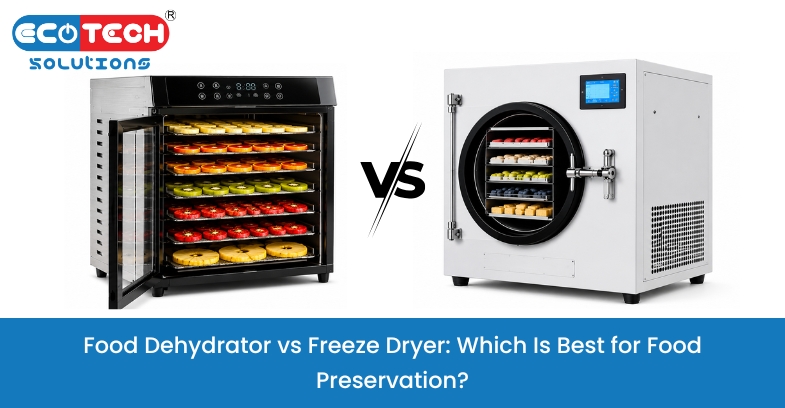
Food preservation has become more important than ever for households, food businesses, farmers, and commercial food processors. Whether you want to reduce food waste, extend shelf life, or preserve nutritional value, choosing the right preservation method can make all the difference. One of the most common questions people ask today is food dehydrator vs freeze dryer. While both methods help preserve food, they work in completely different ways and serve different purposes.
If you’re comparing food dehydrator vs freeze dryer, this comprehensive guide explains how each technology works, their advantages, disadvantages, costs, food quality, nutritional impact, and which solution is best for your needs.
If you’re involved in commercial food processing, working with an experienced Heat Pump Manufacturer can help you choose advanced energy-efficient dehydration systems for large-scale production.
What Is a Food Dehydrator?
A food dehydrator removes moisture from food using controlled warm air circulation. Since microorganisms such as bacteria, mold, and yeast require moisture to grow, removing water significantly extends the shelf life of fruits, vegetables, herbs, meat, spices, seafood, and many other food products.
Modern commercial dehydrators—especially heat pump dehydrators—maintain precise temperature and humidity levels to ensure even drying while preserving flavor, color, and nutrients.
Understanding the Food Dehydration Process is essential before deciding between preservation methods.
What Is a Freeze Dryer?
A freeze dryer uses an entirely different preservation method known as lyophilization.
Instead of using heat, food is first frozen at extremely low temperatures. A vacuum chamber then removes ice crystals through sublimation, allowing frozen water to convert directly into vapor without becoming liquid.
This process preserves:
- Original shape
- Texture
- Color
- Aroma
- Nutritional content
- Cellular structure
Because almost all moisture is removed, freeze-dried food can last for decades when stored properly.
Food Dehydrator vs Freeze Dryer: Understanding the Difference
When discussing food dehydrator vs freeze dryer, the biggest difference lies in how moisture is removed.
| Feature | Food Dehydrator | Freeze Dryer |
| Drying Method | Warm air | Vacuum freezing |
| Moisture Removal | Evaporation | Sublimation |
| Temperature | Low heat | Extremely low temperatures |
| Equipment Cost | Affordable | Expensive |
| Operating Cost | Low | High |
| Shelf Life | 1–5 years | 20–30 years |
| Texture | Chewy or crisp | Light and airy |
| Rehydration | Partial | Nearly original |
| Commercial Scale | Excellent | Limited due to cost |
This comparison clearly highlights why many people researching food dehydrator vs freeze dryer eventually choose dehydration for everyday food preservation.
How Does a Food Dehydrator Work?
A dehydrator continuously circulates heated air around food.
The process involves:
- Air heating
- Moisture evaporation
- Humidity removal
- Continuous airflow
- Even drying
Advanced commercial systems use heat pump technology, making them significantly more energy-efficient than conventional drying methods.
Businesses looking for industrial drying equipment should explore:
How Does a Freeze Dryer Work?
Freeze drying follows several stages:
Step 1: Freezing
Food is frozen below -40°C.
Step 2: Vacuum Creation
A vacuum removes atmospheric pressure.
Step 3: Sublimation
Frozen ice changes directly into vapor.
Step 4: Secondary Drying
Remaining moisture is removed.
This complex process explains why freeze dryers are substantially more expensive.
Food Dehydrator vs Freeze Dryer: Nutritional Comparison
One of the biggest debates surrounding food dehydrator vs freeze dryer concerns nutrient retention.
Food Dehydrator
A dehydrator preserves:
- Fiber
- Minerals
- Most antioxidants
- Natural sugars
Some heat-sensitive vitamins like Vitamin C may slightly decrease.
Freeze Dryer
Freeze drying generally preserves:
- Vitamin C
- Vitamin A
- B Vitamins
- Protein
- Antioxidants
If maximum nutrient preservation is the primary goal, freeze drying has a slight advantage.
Food Dehydrator vs Freeze Dryer: Taste and Texture
Taste plays an important role when selecting a food preservation method.
Dehydrated Food
Produces:
- Chewy fruit
- Crispy vegetables
- Concentrated sweetness
- Rich flavor
Examples include:
- Mango slices
- Apple chips
- Banana chips
- Beef jerky
Freeze-Dried Food
Produces:
- Crunchy texture
- Lightweight products
- Original appearance
- Fast rehydration
Popular examples include:
- Strawberries
- Ice cream
- Coffee
- Complete meals
When evaluating food dehydrator vs freeze dryer, texture preferences often determine the better option.
Cost Comparison
Equipment price is often the deciding factor.
Food Dehydrator
Approximate cost:
- Home models: $100–$500
- Commercial systems: Higher depending on capacity
Operating expenses remain relatively low due to energy efficiency.
Freeze Dryer
Typical costs:
- Home freeze dryers: $2,000–$5,000+
- Commercial freeze dryers: Tens of thousands of dollars
Electricity consumption is significantly higher.
For businesses processing large food volumes daily, dehydration offers a much faster return on investment.
Food Dehydrator vs Freeze Dryer for Commercial Food Processing
Commercial manufacturers often compare food dehydrator vs freeze dryer before investing in equipment.
Food dehydrators are commonly used for:
- Fruits
- Vegetables
- Herbs
- Spices
- Seafood
- Pet food
- Medicinal plants
- Mushrooms
Freeze dryers are more suitable for:
- Pharmaceuticals
- Specialty foods
- Emergency meals
- High-value ingredients
Because of lower operational costs, dehydrators remain the preferred solution for most commercial food processing facilities.
Which Foods Are Best for Dehydration?
Food dehydrators work exceptionally well for:
- Apples
- Mangoes
- Pineapples
- Tomatoes
- Garlic
- Ginger
- Herbs
- Chilies
- Mushrooms
- Meat
- Fish
Heat pump dehydrators provide even drying while protecting product quality.
Which Foods Are Best for Freeze Drying?
Freeze dryers perform best with:
- Complete cooked meals
- Yogurt
- Ice cream
- Coffee
- Berries
- Eggs
- Soups
- Pharmaceuticals
Foods that need near-perfect restoration after rehydration benefit most from freeze drying.
Which Is Better Dehydrator or Freeze Dryer?
Many buyers eventually ask, which is better dehydrator or freeze dryer?
The answer depends entirely on your priorities.
Choose a food dehydrator if you want:
- Lower investment
- Lower electricity costs
- Faster drying
- Commercial food production
- Everyday preservation
- High production capacity
Choose a freeze dryer if you need:
- Maximum shelf life
- Premium products
- Long-term emergency storage
- Excellent rehydration quality
For most households and commercial food businesses, a dehydrator provides the best balance of affordability, efficiency, and productivity. Therefore, when asking which is better dehydrator or freeze dryer, the dehydrator is often the more practical choice.
Environmental Impact
Modern heat pump dehydrators consume significantly less energy compared to conventional electric heaters.
Advantages include:
- Lower carbon footprint
- Reduced electricity bills
- Sustainable food processing
- Better energy recovery
Freeze dryers require refrigeration systems and vacuum pumps that consume substantially more electricity during each drying cycle.
Maintenance Requirements
Food Dehydrators
Maintenance usually includes:
- Cleaning trays
- Air filter inspection
- Fan maintenance
- Periodic servicing
Freeze Dryers
Maintenance often requires:
- Vacuum pump oil changes
- Seal replacement
- Vacuum testing
- Refrigeration servicing
This makes freeze dryers more expensive to maintain over time.
Food Dehydrator vs Freeze Dryer: Pros and Cons
Food Dehydrator Pros
- Affordable equipment
- Energy efficient
- Easy operation
- Lower maintenance
- Excellent for bulk production
- Faster drying cycles
Cons
- Slight nutrient loss
- Texture changes
- Shorter shelf life than freeze drying
Freeze Dryer Pros
- Maximum nutrient retention
- Long shelf life
- Excellent rehydration
- Preserves original appearance
Cons
- High purchase cost
- High operating expenses
- Longer processing time
- Complex maintenance
Final Verdict: Food Dehydrator vs Freeze Dryer
Choosing between food dehydrator vs freeze dryer ultimately depends on your goals, budget, and production requirements.
A freeze dryer excels when preserving premium foods for extremely long storage periods with minimal quality loss. However, the equipment cost, energy consumption, and maintenance requirements make it less practical for many users.
A food dehydrator offers an affordable, energy-efficient, and reliable solution for preserving fruits, vegetables, herbs, meats, spices, and countless other food products. For businesses and commercial processors, modern heat pump dehydration technology delivers excellent product quality while reducing operational costs.
If you’re still wondering which is better dehydrator or freeze dryer, the answer for most everyday users and commercial operations is a food dehydrator. It provides outstanding preservation performance, lower running costs, and greater scalability without the significant investment required for freeze drying.
For advanced, energy-saving food drying solutions, explore the All in One Heat Pump Dehydrator and learn more about the Food Dehydration Process to choose the right technology for your food preservation needs.
FAQs
1. Is a food dehydrator cheaper than a freeze dryer?
Yes. Food dehydrators are significantly less expensive to purchase, operate, and maintain than freeze dryers, making them ideal for home users and commercial food businesses.
2. Can dehydrated food last as long as freeze-dried food?
No. Properly stored dehydrated food typically lasts 1–5 years, while freeze-dried food can last 20–30 years under ideal conditions.
3. Which foods are best suited for a food dehydrator?
Fruits, vegetables, herbs, mushrooms, spices, meat, fish, and pet treats are excellent candidates for dehydration.
4. Does freeze drying preserve more nutrients?
Freeze drying generally retains more heat-sensitive vitamins, but modern heat pump dehydrators also preserve most essential nutrients while using far less energy.
5. Which is better dehydrator or freeze dryer for commercial food processing?
For most commercial applications, a food dehydrator—especially a heat pump dehydrator—is the better choice due to lower operating costs, higher throughput, and better return on investment.