

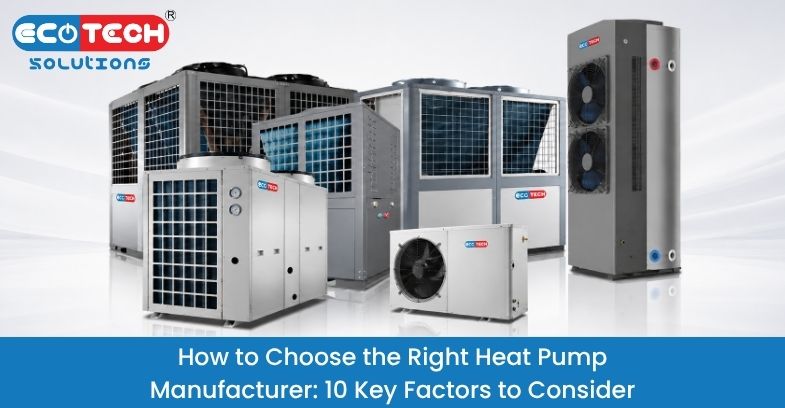
Choosing the right heat pump manufacturer is an important decision for businesses, commercial facilities, industrial operations, and residential applications. A heat pump is a long-term investment, and the manufacturer you select can influence system efficiency, reliability, operating costs, maintenance requirements, and overall performance.
With many companies offering different technologies, capacities, configurations, and price points, it can be difficult to determine which supplier is the right fit. Instead of choosing a system based only on its initial price, it is important to evaluate the manufacturer’s technology, product quality, customization capabilities, technical support, warranty, and experience.
If you are wondering how to choose the right heat pump manufacturer, the following 10 factors can help you make a more informed decision.
1. Evaluate the Manufacturer’s Industry Experience
Experience is one of the first factors to consider when selecting a heat pump supplier. A manufacturer with established experience is more likely to understand different heating requirements, operating environments, installation challenges, and application-specific demands.
Look at how long the company has been involved in heat pump technology and whether it has experience serving applications similar to yours. Residential water heating, hotels, hospitals, food processing, manufacturing facilities, swimming pools, and other commercial applications can have very different requirements.
When Choosing a Heat Pump Manufacturer, consider:
- Years of experience in heat pump technology
- Range of applications served
- Technical expertise
- Product development capabilities
- Previous commercial or industrial projects
- Understanding of local operating conditions
A manufacturer’s experience can provide valuable insight when determining which heat pump configuration and capacity are appropriate for a specific application.
2. Check the Available Heat Pump Technology
Not every heat pump is designed for the same purpose. Different applications may require different technologies, refrigerants, compressors, temperature ranges, capacities, or system configurations.
Before selecting a supplier, review its product portfolio carefully. A capable heat pump system manufacturer should offer solutions that match different heating requirements rather than relying on a single standard configuration.
Depending on your application, you may need a system designed for:
- Domestic hot water
- Commercial hot water
- Industrial water heating
- Swimming pool heating
- High-temperature applications
- Energy-efficient drying
- Specialized industrial processes
For residential requirements, a Domestic Heat Pump can provide an efficient approach to water heating. For larger facilities, commercial and industrial systems may require significantly different specifications.
The right technology should be selected according to your required water temperature, heating capacity, operating conditions, available space, and expected usage.
3. Compare Energy Efficiency and Performance
Energy efficiency should be a major consideration when evaluating manufacturers. Heat pumps are generally designed to transfer heat rather than generate heat directly, which can help reduce energy consumption compared with some conventional heating methods.
However, efficiency can vary considerably between systems.
When comparing manufacturers, review performance information such as:
- Coefficient of Performance (COP)
- Heating capacity
- Energy consumption
- Operating temperature range
- Hot water recovery rate
- Seasonal performance where applicable
- Compressor efficiency
- Performance under different ambient conditions
Do not evaluate efficiency based only on a headline number. Ask the manufacturer to explain the conditions under which the stated performance was measured.
A system that appears inexpensive initially may have higher operating costs if it is poorly matched to the application. Looking at both purchase price and long-term energy consumption provides a more realistic picture of value.
4. Look at Product Quality and Reliability
A heat pump can operate for many years, so product quality should not be overlooked. Components such as compressors, heat exchangers, controllers, fans, pumps, sensors, and electrical systems can all affect reliability.
A reputable manufacturer should be able to explain the major components used in its systems and the quality standards followed during manufacturing.
Ask questions such as:
- What type of compressor is used?
- What materials are used for heat exchangers?
- How is corrosion resistance addressed?
- What safety controls are incorporated?
- How are systems tested before delivery?
- What quality-control procedures are followed?
A reliable heat pump system manufacturer should focus not only on performance but also on durability and consistent operation.
For commercial and industrial applications, reliability becomes even more important because equipment downtime can affect production, customer service, energy consumption, and operating costs.
5. Consider Customization Options
Every project has different requirements. A standard heat pump may work well for one application but may not be suitable for another.
Customization can be particularly important for commercial and industrial projects where factors such as water demand, temperature requirements, available installation space, process requirements, and integration with existing systems can vary.
Ask whether the manufacturer can provide solutions based on:
- Required heating capacity
- Water storage requirements
- Temperature requirements
- Available installation space
- Existing heating systems
- Electrical infrastructure
- Control and monitoring requirements
- Specific industrial processes
The ability to provide application-specific solutions is an important consideration when deciding how to choose the right heat pump manufacturer.
A manufacturer that understands your application can help prevent problems caused by selecting a system that is either undersized or unnecessarily oversized.
6. Verify Manufacturing Standards and Testing
Quality assurance should be an essential part of the selection process. Before purchasing, find out how the manufacturer tests its equipment and what quality-control procedures are followed.
Testing can help identify potential problems before equipment reaches the customer. Depending on the product and application, manufacturers may conduct checks related to:
- Heating performance
- Electrical safety
- Refrigeration systems
- Pressure
- Temperature controls
- Component operation
- System reliability
- Overall functionality
When researching the best heat pump manufacturer, don’t rely solely on marketing claims. Look for transparent technical specifications and evidence of consistent manufacturing and testing practices.
It is also useful to ask for technical documentation, product specifications, installation guidelines, and maintenance recommendations.
7. Assess Warranty and After-Sales Support
A heat pump is a long-term investment, so support after purchase matters just as much as the equipment itself.
Before making a decision, understand exactly what the warranty covers. Ask about:
- Warranty duration
- Compressor coverage
- Major component coverage
- Replacement procedures
- Service availability
- Response times
- Maintenance support
- Availability of spare parts
Strong after-sales support can make a significant difference if an issue occurs during operation.
When considering how to choose the right heat pump manufacturer, don’t compare manufacturers only by product price. A supplier with dependable technical support and service can potentially provide greater long-term value.
For commercial and industrial customers, it is particularly important to understand how service requests are handled and whether trained technicians are available when required.
8. Check the Manufacturer’s Technical Expertise
A good manufacturer should be able to provide more than a product catalogue. Technical guidance is often essential for selecting the correct system.
The manufacturer or its technical team should be able to discuss factors such as:
- Heating load
- Required water temperature
- Operating conditions
- Heat pump sizing
- System configuration
- Installation requirements
- Storage capacity
- Energy consumption
- Integration with existing systems
A knowledgeable heat pump system manufacturer can help you understand the technical considerations behind the recommended solution.
This is especially valuable when comparing multiple technologies. Instead of simply asking which model is the cheapest, you can evaluate which system is technically appropriate for your application.
9. Review the Manufacturer’s Reputation and Market Presence
Reputation can provide useful information when comparing manufacturers. Look for evidence that the company has successfully supplied heat pump solutions to customers with requirements similar to yours.
You can research:
- Customer reviews
- Project experience
- Product information
- Industry presence
- Customer support reputation
- Application examples
- Technical resources
- Company history
However, reputation should be evaluated alongside technical specifications. A company may have a strong presence in one segment but not necessarily specialize in the type of heat pump system you need.
If you are researching the best heat pump Brand in India, consider the manufacturer’s experience, product quality, energy efficiency, technical expertise, and after-sales support rather than relying only on brand recognition.
For businesses looking for a reliable supplier, exploring the capabilities of an established Heat Pump Manufacturer can be a useful starting point.
10. Compare Total Cost of Ownership
The purchase price is only one part of the total cost of a heat pump system.
A better purchasing decision considers the system’s total cost of ownership over its expected operating life. This can include:
- Initial equipment cost
- Installation cost
- Electricity consumption
- Routine maintenance
- Spare parts
- Repairs
- Downtime
- Replacement costs
A lower-priced system is not necessarily the most economical choice if it consumes more energy or requires frequent maintenance.
Similarly, a higher initial investment may provide better long-term value if the system offers improved efficiency, durability, and serviceability.
This is one of the most important principles to remember when learning how to choose the right heat pump manufacturer. Compare long-term performance and operating costs rather than focusing exclusively on the initial quotation.
Why the Right Manufacturer Matters
The manufacturer you select can influence nearly every stage of your heat pump project—from product selection and system design to installation, maintenance, and long-term performance.
A suitable manufacturer should understand your heating requirements and provide a system that is appropriately sized and configured. The company should also offer clear technical information and reliable support throughout the equipment’s operating life.
This is particularly important for businesses that depend on continuous hot water or process heating. A poorly selected system may lead to inefficient operation, higher energy costs, frequent service requirements, or insufficient heating capacity.
Therefore, selecting the right supplier should be treated as a technical and long-term business decision rather than simply a purchasing exercise.
Questions to Ask Before Selecting a Heat Pump Manufacturer
Before finalizing your supplier, consider asking these questions:
- How much experience do you have with heat pump systems?
- What types of heat pumps do you manufacture?
- Can you provide a solution based on my specific heating requirements?
- What efficiency and performance information can you provide?
- Which major components are used in the system?
- What testing and quality-control procedures are followed?
- What warranty is included?
- Is technical support available after installation?
- Are spare parts readily available?
- What is the estimated total cost of ownership?
The answers can help you compare manufacturers more objectively and identify a supplier that fits your project’s technical and commercial requirements.
Choosing a Heat Pump Manufacturer: Final Considerations
Selecting the right manufacturer requires more than comparing product prices. You should evaluate experience, technology, efficiency, quality, customization, testing, warranty, technical support, reputation, and total ownership costs.
The goal is to find a manufacturer that can provide a reliable and appropriately designed solution for your specific application.
Whether you need a domestic water heating solution or a larger commercial or industrial system, take time to understand your requirements before requesting quotations. Clearly defining your heating capacity, temperature requirements, operating conditions, space limitations, and expected usage will make it easier to compare suppliers.
If you are still researching how to choose the right heat pump manufacturer, start by creating a shortlist of experienced manufacturers and evaluate each one using the 10 factors discussed above.
A manufacturer that combines quality products, efficient technology, technical expertise, customization, and dependable after-sales support can provide much greater long-term value than a supplier selected solely because of a low initial price.
Ultimately, the best heat pump manufacturer is not simply the company offering the lowest-cost system. It is the manufacturer that can deliver the right technology, performance, reliability, support, and overall value for your specific heating requirements.
Frequently Asked Questions
1. How do I choose the right heat pump manufacturer?
Consider experience, product quality, energy efficiency, warranty, technical support, and customization options.
2. What should I look for in a heat pump manufacturer?
Look for reliable products, proven technology, quality standards, technical expertise, and strong after-sales support.
3. How can I identify the best heat pump manufacturer?
Compare manufacturers based on efficiency, reliability, product range, warranty, service, and total ownership cost.
4. Why is energy efficiency important?
An efficient heat pump can reduce electricity consumption and help lower long-term operating costs.
5. What is a heat pump system manufacturer?
A heat pump system manufacturer designs and produces heat pump systems for domestic, commercial, and industrial applications.
Contact Us: EcoTech Solutions