
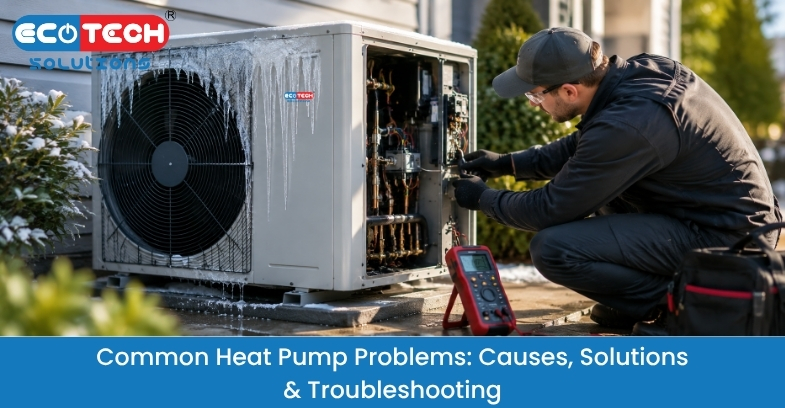
Heat pumps are becoming a popular choice for efficient heating and hot-water applications in homes, commercial buildings, and industrial facilities. Like any mechanical equipment, they can experience operational problems due to poor maintenance, incorrect installation, restricted airflow, component wear, or environmental conditions. Understanding Common Heat Pump Problems can help users recognize early warning signs and take appropriate action before a minor issue becomes a costly repair.
Whether a heat pump is producing insufficient heat, making unusual noises, freezing, leaking water, or consuming more energy than expected, identifying the cause is the first step toward an effective solution. A reliable Heat Pump Manufacturer can also help with proper system selection, installation guidance, maintenance, and technical support for different applications.
What Are the Most Common Heat Pump Problems?
If you are wondering what are the most common heat pump problems, several issues occur more frequently than others. These include insufficient heating, poor airflow, unusual noises, refrigerant-related problems, frozen outdoor coils, water leakage, frequent cycling, thermostat problems, and increased energy consumption.
Some problems can be addressed through basic maintenance, while others require professional inspection. Knowing the difference is important because attempting to repair electrical, refrigerant, or mechanical components without appropriate expertise can create additional risks.
The most common warning signs include:
- The system is not heating effectively
- Airflow is weaker than usual
- The unit makes unusual sounds
- Ice forms on the outdoor unit
- Water collects around the equipment
- The heat pump starts and stops frequently
- Energy consumption suddenly increases
- The thermostat does not control the system correctly
- Heating performance gradually decreases
1. Heat Pump Is Not Heating Properly
One of the most noticeable Common Heat Pump Problems is insufficient heating. The system may run for a long period but fail to reach the desired temperature.
Several factors can cause this problem. A dirty filter can restrict airflow, while blocked vents or outdoor obstructions can reduce the amount of air moving through the system. Incorrect thermostat settings can also make the equipment appear to be malfunctioning.
Other possible causes include dirty coils, refrigerant problems, sensor faults, or mechanical component failure.
Before calling a technician, check the thermostat settings and inspect accessible filters. Make sure air outlets are not blocked and that the outdoor unit has sufficient clearance.
If the problem continues after these basic checks, professional inspection is recommended. A technician can examine refrigerant levels, coils, sensors, electrical connections, and other components to identify the actual cause.
2. Poor Airflow
Restricted airflow is another common problem that can affect heat-pump performance. When air cannot move freely through the system, the equipment may work harder while providing less heating or cooling.
Dirty filters are one of the simplest causes to address. Depending on the system and manufacturer’s recommendations, filters may need regular cleaning or replacement. Blocked vents, dirty coils, damaged ductwork, or blower problems can also reduce airflow.
These common heat pump issues should not be ignored because restricted airflow can affect comfort and system efficiency. Keeping air pathways clear and following the recommended maintenance schedule can help maintain proper operation.
For larger commercial or industrial systems, airflow requirements can be more complex. Professional maintenance should include an assessment of the system’s operating conditions and airflow performance.
3. Heat Pump Makes Unusual Noises
Heat pumps naturally make some operating sounds, but a sudden change in noise can indicate a problem. Rattling, grinding, buzzing, clicking, or squealing noises may point to different causes.
For example, loose panels or components can create rattling sounds. Debris near an outdoor fan can produce unusual noise, while grinding may indicate mechanical wear. Electrical components may also produce buzzing or clicking sounds when they are not operating correctly.
Do not ignore a noise that becomes louder or occurs repeatedly. If the equipment produces severe vibration, a burning smell, or a loud mechanical sound, switch it off and contact a qualified professional.
4. Heat Pump Freezes Up
Ice or frost on an outdoor heat-pump unit can sometimes occur during normal operation, particularly in heating mode. Heat pumps normally have a defrost cycle designed to remove accumulated frost.
However, excessive or persistent ice can indicate an underlying problem. Restricted airflow, dirty coils, fan problems, defrost-control faults, or refrigerant-related issues can contribute to excessive freezing.
If you notice significant ice buildup, first make sure the area around the outdoor unit is free from leaves, vegetation, snow, and other obstructions. Do not use sharp tools to remove ice because the coil fins can be easily damaged.
If freezing happens repeatedly, professional troubleshooting is recommended.
5. Heat Pump Is Leaking Water
Water around a heat pump does not always mean the system is damaged. Condensation can occur during normal operation. However, excessive or unexpected water leakage should be investigated.
A blocked condensate drain, damaged drain pipe, frozen coil, restricted airflow, or installation problem may result in water accumulation.
Persistent leakage can potentially damage surrounding walls, flooring, insulation, or other components. Check for visible blockages around accessible drainage areas, but avoid dismantling the equipment without professional assistance.
For systems installed in commercial or industrial environments, drainage should be designed and maintained according to the equipment’s operating requirements.
6. Heat Pump Turns On and Off Frequently
Frequent starting and stopping is another issue that can reduce comfort and increase equipment wear. This behavior is often referred to as short cycling.
Short cycling can occur because of an incorrectly sized system, thermostat problems, restricted airflow, sensor faults, or other equipment issues.
A dirty filter is an easy maintenance item to check. However, if the heat pump continues to switch on and off repeatedly, professional diagnosis is advisable.
Correct system sizing is particularly important when installing new equipment. A properly selected system should match the heating or hot-water requirements of the application rather than simply being selected based on a general capacity estimate.
7. Heat Pump Uses Too Much Energy
A sudden increase in energy consumption can be one of the less obvious Common Heat Pump Problems. Users may notice higher electricity bills even though their usage habits have not changed significantly.
Several factors can contribute to increased energy consumption, including dirty filters, restricted airflow, dirty coils, incorrect thermostat settings, refrigerant problems, aging components, and poor insulation.
Environmental conditions can also affect energy requirements. A heat pump may need to work harder when operating conditions become more demanding.
Regular maintenance helps identify efficiency problems early. Businesses can also monitor energy consumption over time and investigate unusual increases rather than assuming higher consumption is unavoidable.
8. Thermostat Is Not Working Correctly
Sometimes the heat pump itself is working properly, but the thermostat is causing the problem. Incorrect settings, sensor problems, low batteries, poor thermostat placement, or communication faults can affect temperature control.
Start by checking the selected operating mode and temperature setting. If the thermostat display is blank, check the manufacturer’s recommendations for battery replacement or power-related troubleshooting.
If the thermostat continues to behave incorrectly, professional inspection may be necessary. A technician can determine whether the thermostat, wiring, sensors, or heat-pump controls are responsible.
9. Refrigerant Problems
Refrigerant plays an essential role in transferring heat. If the system develops a refrigerant leak or has an incorrect refrigerant charge, its heating or cooling performance can decline.
Signs of a possible refrigerant-related problem may include reduced capacity, longer operating cycles, ice formation, and unusual performance changes.
Refrigerant work should be handled by appropriately qualified professionals. Simply adding refrigerant without identifying a possible leak or underlying problem may not provide a lasting solution.
This is why professional diagnosis is important when refrigerant-related faults are suspected.
How to Fix Common Heat Pump Problems
If you are searching for how to fix common heat pump problems, the first step is to identify whether the issue can be safely addressed through basic maintenance or requires professional service.
For simple problems, check thermostat settings, clean or replace accessible filters, ensure vents are unobstructed, and keep the outdoor unit free of leaves and debris. Always follow the equipment manufacturer’s maintenance instructions.
However, do not attempt to repair refrigerant circuits, electrical panels, compressors, or other complex components without the required technical knowledge and qualifications.
A professional technician can inspect the system systematically and determine whether the problem is caused by airflow, controls, refrigerant, electrical components, mechanical wear, or installation conditions.
Preventive Maintenance for Better Heat Pump Performance
Preventive maintenance is one of the most effective ways to reduce common heat pump issues and maintain reliable performance.
Important maintenance practices include:
- Cleaning or replacing filters at recommended intervals
- Keeping outdoor units free from debris
- Checking airflow pathways
- Inspecting coils
- Checking drainage systems
- Monitoring unusual sounds or vibrations
- Reviewing energy consumption
- Inspecting electrical components during professional service
- Following the manufacturer’s maintenance recommendations
Maintenance frequency depends on the type of heat pump, operating environment, usage, and application. A domestic system may have different requirements from a large commercial or industrial installation.
Choosing the Right Heat Pump
Many operating problems can be avoided by selecting the right system before installation. Capacity, application, operating conditions, installation environment, expected hot-water demand, controls, and maintenance requirements should all be considered.
The right equipment can provide better performance and may reduce unnecessary strain on components. Working with an experienced manufacturer or supplier can also make system selection, installation, and after-sales support easier.
For residential applications, a properly sized Domestic Heat Pump can be selected according to household hot-water requirements and operating conditions.
For businesses and industrial facilities, the selection process may require a more detailed assessment of hot-water demand, operating temperatures, load profiles, and available installation space.
Understanding the Benefits of Heat Pump Technology
Understanding the technology before investing in a system can help users make better decisions. Heat pumps can transfer heat rather than relying only on direct electrical resistance or conventional fuel-based heating methods.
Depending on the application, this approach can provide useful advantages related to energy efficiency, operating costs, heat recovery, and environmental performance. You can learn more about the Benefits of Heat Pump technology and how it can support different heating requirements.
However, performance depends on correct sizing, installation, operating conditions, maintenance, and equipment selection. A heat pump should therefore be evaluated according to the specific requirements of the application rather than based only on general efficiency claims.
When Should You Call a Professional?
Basic maintenance can resolve some issues, but certain warning signs require professional attention. Contact a qualified technician if:
- The system repeatedly shuts down
- Heating performance drops significantly
- Ice keeps forming on the unit
- Water leakage continues
- The system produces severe or unusual noises
- There is a burning smell
- Electrical faults are suspected
- Energy consumption increases unexpectedly
- Refrigerant problems are suspected
- The equipment repeatedly requires restarting
Professional troubleshooting can identify the underlying cause instead of simply treating the visible symptom.
Final Thoughts
Knowing what are the most common heat pump problems can help users recognize performance changes early and take appropriate action. Issues such as poor airflow, inadequate heating, unusual noises, freezing, water leakage, short cycling, thermostat faults, and increased energy consumption can often be reduced through proper installation and preventive maintenance.
When asking how to fix common heat pump problems, always begin with safe maintenance checks and follow the manufacturer’s instructions. Qualified professionals should handle more complex electrical, refrigerant, and mechanical problems.
With proper equipment selection, installation, regular maintenance, and timely troubleshooting, a heat pump can deliver reliable performance in residential, commercial, and industrial applications.
Contact Us: EcoTech Solutions