

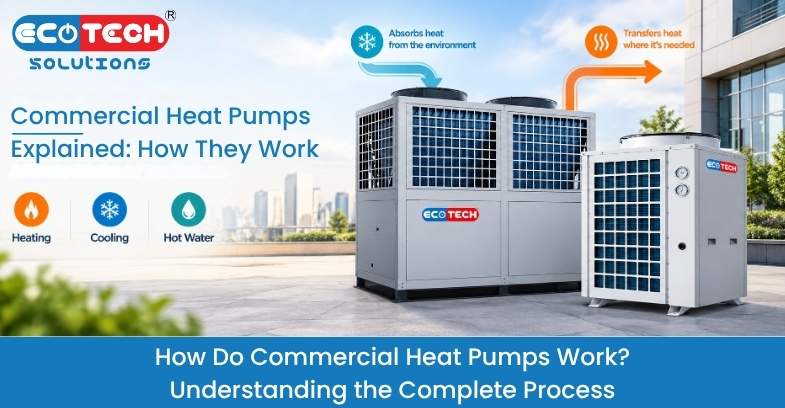
As businesses continue looking for ways to reduce energy costs and improve operational efficiency, commercial heat pumps have become an increasingly popular solution. From hotels and hospitals to manufacturing facilities, warehouses, and commercial buildings, these systems can provide efficient heating, cooling, and hot water while helping businesses reduce their dependence on conventional fossil-fuel-based equipment.
But how do commercial heat pumps work, and why are they becoming an important part of modern energy-efficient infrastructure?
Unlike traditional heating systems that generate heat by burning fuel, a heat pump transfers heat from one location to another. This ability to move existing thermal energy makes heat pump technology an efficient option for many commercial applications.
In this guide, we will explain how do commercial heat pumps work, the major components involved, their operating process, benefits, applications, and important factors businesses should consider before choosing a system.
What Is a Commercial Heat Pump?
A commercial heat pump is an energy-efficient system designed to transfer heat for heating, cooling, hot water production, or industrial processes.
Traditional boilers and furnaces typically create heat through combustion or electrical resistance. A heat pump works differently. Instead of producing heat directly, it captures heat energy from a source and transfers it to where it is needed.
A commercial heat pump system can extract heat from:
- Outdoor air
- Water sources
- Ground sources
- Waste heat from industrial processes
- Ventilation and exhaust systems
Depending on the design and application, commercial heat pumps can provide heating, cooling, or both.
Modern Commercial Heat Pump Technology has made these systems suitable for a wide range of commercial and industrial applications, including facilities that require consistent temperatures or large volumes of hot water.
Businesses looking for advanced solutions can explore Commercial Heat Pumps designed for different commercial requirements.
How Do Commercial Heat Pumps Work?
So, how do commercial heat pumps work?
The basic principle is simple: a heat pump absorbs heat from one location and transfers it to another using a refrigeration cycle.
Even when outdoor temperatures feel cold, there can still be thermal energy available in the air, water, or ground. The heat pump captures this energy and increases its temperature before delivering it to the required space or process.
The process typically involves four main stages:
- Heat absorption
- Compression
- Heat transfer
- Expansion
Let’s look at each stage in more detail.
1. Heat Absorption Through the Evaporator
The process begins at the evaporator.
A refrigerant circulates through the heat pump system at a low temperature and pressure. As the refrigerant passes through the evaporator, it absorbs heat from the surrounding environment or another available heat source.
Depending on the system design, heat may come from:
- Outdoor air
- Water
- Ground sources
- Industrial waste heat
- Exhaust air
As the refrigerant absorbs thermal energy, it changes from a liquid into a low-pressure vapor.
This is the first important step in understanding how do commercial heat pumps work, because the system does not need to generate all the heat from scratch. Instead, it collects and transfers available energy.
2. The Compressor Increases the Temperature
After the refrigerant absorbs heat, the vapor moves into the compressor.
The compressor increases the pressure of the refrigerant vapor. As pressure increases, the temperature of the refrigerant also rises significantly.
This high-temperature refrigerant now contains concentrated thermal energy that can be transferred to the building, water system, or industrial process.
The compressor is one of the most important components in a commercial heat pump system because it helps elevate low-temperature energy into useful high-temperature heat.
3. Heat Transfer Through the Condenser
The hot, high-pressure refrigerant then flows into the condenser.
Inside the condenser, the refrigerant releases its heat to the desired application.
For example, the heat may be used for:
- Space heating
- Commercial hot water production
- Swimming pool heating
- Industrial drying
- Process heating
- Manufacturing operations
As the refrigerant releases heat, it cools down and changes back into a liquid.
This ability to transfer thermal energy efficiently is one reason Commercial Heat Pump Technology is increasingly being adopted across different industries.
4. Expansion and the Start of a New Cycle
After leaving the condenser, the refrigerant passes through an expansion valve.
The expansion valve reduces the refrigerant’s pressure and temperature.
The refrigerant then returns to the evaporator, where it begins absorbing heat again.
This continuous refrigeration cycle allows the heat pump to provide a consistent supply of heating or cooling.
In simple terms, how do commercial heat pumps work?
They:
- Capture available heat
- Compress the refrigerant to increase its temperature
- Transfer the heat to the required location
- Repeat the process continuously
The Main Components of a Commercial Heat Pump System
A commercial heat pump system consists of several important components working together to move heat efficiently.
Evaporator
The evaporator absorbs heat from the selected source.
Compressor
The compressor increases the pressure and temperature of the refrigerant.
Condenser
The condenser transfers heat to the building, water, or industrial application.
Expansion Valve
The expansion valve lowers refrigerant pressure and prepares it for another cycle.
Refrigerant
The refrigerant is responsible for absorbing and transporting heat throughout the system.
Heat Exchangers
Heat exchangers help transfer thermal energy between different fluids or systems without mixing them.
Together, these components allow the system to operate efficiently and deliver heating or cooling based on business requirements.
How Commercial Heat Pumps Provide Both Heating and Cooling
One of the major advantages of modern heat pumps is their ability to support both heating and cooling.
Many commercial heating and cooling systems use a reversible refrigeration cycle.
During heating mode, the heat pump extracts heat from an external source and transfers it indoors or into a water system.
During cooling mode, the process is reversed.
Instead of bringing heat into the building, the system removes unwanted heat from indoor spaces and transfers it outside.
This makes heat pumps a flexible option for businesses that need year-round temperature control.
For example, commercial facilities may use heat pumps for:
- Heating during colder months
- Cooling during warmer months
- Hot water production throughout the year
By combining multiple functions into one solution, businesses may reduce the need for separate equipment.
Types of Commercial Heat Pumps
Different types of commercial heat pumps are available based on the heat source and application.
Air Source Heat Pumps
Air source systems capture thermal energy from outdoor air.
They are commonly used because air is widely available and installation can be relatively straightforward depending on the facility.
Water Source Heat Pumps
Water source systems extract heat from water bodies, groundwater, or water loops.
These systems can provide stable performance where suitable water sources are available.
Ground Source Heat Pumps
Ground source systems extract heat from the ground.
Because underground temperatures can remain relatively stable, these systems may offer consistent performance in appropriate locations.
High-Temperature Heat Pumps
High-temperature systems are designed for applications requiring elevated water or process temperatures.
They are increasingly being used in industrial facilities where businesses want to improve energy efficiency and recover waste heat.
A professional Heat Pump Manufacturer can help businesses understand which type of system is most appropriate for their specific operational requirements.
Why Businesses Are Choosing Commercial Heat Pumps
Businesses across multiple industries are investing in heat pump solutions because of their potential energy and operational benefits.
Here are some important advantages.
Energy Efficiency
Heat pumps transfer existing heat instead of relying entirely on fuel combustion.
This can make them an efficient alternative for many heating applications.
Lower Operating Costs
Energy consumption is an important concern for commercial facilities.
A properly selected and designed heat pump may help reduce operational energy costs compared with older or less efficient heating equipment.
Heating and Cooling in One System
Modern commercial heating and cooling systems can provide multiple functions through one integrated technology.
This can simplify building infrastructure and equipment management.
Reduced Carbon Emissions
Businesses focused on sustainability can use electric heat pump technology as part of their strategy to reduce reliance on fossil fuels.
Actual environmental benefits depend on factors such as electricity sources, system design, and operating conditions.
Waste Heat Recovery Opportunities
Industrial facilities often generate waste heat during manufacturing processes.
Instead of allowing this heat to escape, heat pumps can potentially recover and reuse the energy.
This is one of the areas where advanced Commercial Heat Pump Technology can create significant opportunities for energy optimization.
Commercial Applications of Heat Pumps
Commercial heat pumps can be used across a wide range of industries.
Common applications include:
- Hotels and resorts
- Hospitals and healthcare facilities
- Commercial buildings
- Educational institutions
- Food processing facilities
- Pharmaceutical manufacturing
- Textile industries
- Industrial manufacturing plants
- Warehouses
- Swimming pools
- Commercial kitchens
- Dairy processing facilities
The correct system depends on factors such as heating demand, operating temperatures, available heat sources, and facility size.
Businesses can also explore energy-efficient equipment and solutions through EcoTech Solutions.
How Do Commercial Heat Pumps Work in Industrial Applications?
Understanding how do commercial heat pumps work becomes even more important in industrial environments.
Industrial operations frequently produce excess heat from equipment, refrigeration processes, ventilation systems, and manufacturing operations.
Instead of wasting this energy, a heat pump can capture low-temperature waste heat and upgrade it to a more useful temperature.
For example, recovered heat may be reused for:
- Process water heating
- Space heating
- Drying operations
- Cleaning processes
- Preheating applications
This process can help businesses improve the overall energy efficiency of their facilities.
Advanced Commercial Heat Pump Technology is particularly valuable for industries looking to improve energy recovery and reduce operating expenses.
Factors That Affect Commercial Heat Pump Performance
Although heat pumps can offer significant benefits, performance depends on several important factors.
Climate Conditions
Outdoor temperatures can influence the performance of air-source systems.
Heat Source Availability
The quality and consistency of the available heat source can affect efficiency.
Required Temperature
Applications requiring higher temperatures may require specialized equipment.
Building or Facility Size
A system must be properly sized based on heating and cooling demand.
Installation Design
Poor installation or system design can reduce efficiency and performance.
Maintenance
Regular inspections and maintenance can help ensure reliable operation.
Before making a decision, businesses should carefully evaluate their energy requirements and operational goals.
For more guidance, read How to Choose a Commercial Heat Pump: Key Factors to Consider.
Commercial Heat Pumps Compared With Traditional Heating Systems
Traditional heating equipment generally produces heat through:
- Fuel combustion
- Gas
- Oil
- Electrical resistance
Heat pumps primarily move thermal energy from one location to another.
This difference can make heat pumps an attractive option for businesses focused on energy efficiency.
However, choosing between technologies should depend on the specific application.
Factors to consider include:
- Energy costs
- Required operating temperature
- Existing infrastructure
- Climate
- Heating demand
- Cooling requirements
- Available space
- Long-term operating goals
A properly designed commercial heat pump system should always be selected based on the facility’s unique requirements.
Are Commercial Heat Pumps Suitable for Every Business?
Commercial heat pumps can provide excellent benefits, but they are not necessarily the same solution for every facility.
Before installation, businesses should evaluate:
- Current energy consumption
- Heating and cooling requirements
- Peak demand
- Existing equipment
- Available heat sources
- Required water temperature
- Available installation space
- Budget and long-term operating costs
Working with an experienced manufacturer or supplier can help businesses determine whether heat pump technology is suitable for their application.
The Future of Commercial Heating and Cooling Systems
The demand for energy-efficient technologies is expected to continue increasing as businesses focus on reducing energy costs and improving sustainability.
Commercial heat pumps are becoming an important part of modern commercial heating and cooling systems because they offer flexible heating, cooling, and heat-recovery capabilities.
Future developments in compressors, refrigerants, controls, and high-temperature systems may continue expanding the applications of heat pump technology.
Businesses that invest in energy-efficient infrastructure today may be better positioned to manage future energy demands and sustainability requirements.
Final Thoughts: How Do Commercial Heat Pumps Work?
So, how do commercial heat pumps work?
Commercial heat pumps use a refrigeration cycle to capture heat from air, water, ground, or industrial waste heat and transfer it where it is needed.
The process involves four major stages:
- Absorbing heat through the evaporator
- Increasing refrigerant temperature through compression
- Releasing useful heat through the condenser
- Reducing pressure through the expansion valve before repeating the cycle
Because they move heat rather than simply generating it through combustion, commercial heat pumps can offer an efficient solution for businesses requiring heating, cooling, hot water, or industrial process heat.
As Commercial Heat Pump Technology continues to advance, more businesses are exploring these systems for energy efficiency, operational flexibility, and waste heat recovery opportunities.
Whether you operate a commercial building, hotel, manufacturing facility, or industrial plant, understanding how do commercial heat pumps work is the first step toward choosing the right solution for your energy requirements.