

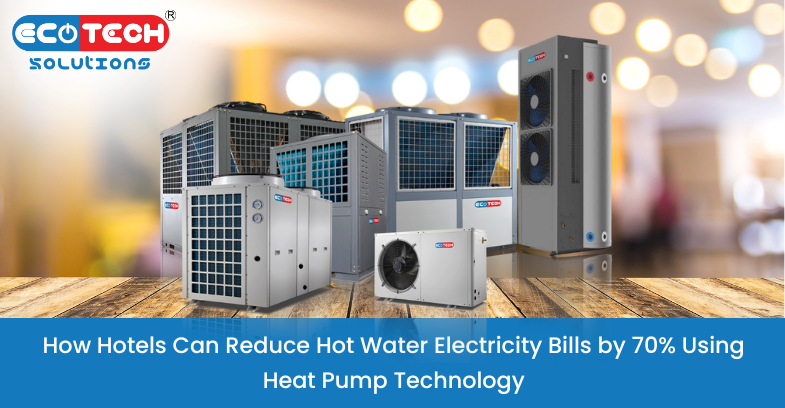
The hospitality industry operates around the clock. From guest bathrooms and kitchens to laundry systems, spas, and swimming pools, hotels consume enormous amounts of hot water every day. Unfortunately, traditional electric geysers and boiler-based systems often become one of the biggest contributors to rising operational costs.
For hotels looking to improve profitability while meeting sustainability goals, adopting a hotel heat pump water heater system has become one of the smartest long-term investments.
Modern heat pump technology can reduce hot water electricity consumption by up to 70%, helping hotels improve operational efficiency, lower carbon emissions, and provide uninterrupted hot water supply without excessive utility expenses.
For hospitality businesses, this is no longer just an energy-saving upgrade. It is a strategic infrastructure decision.
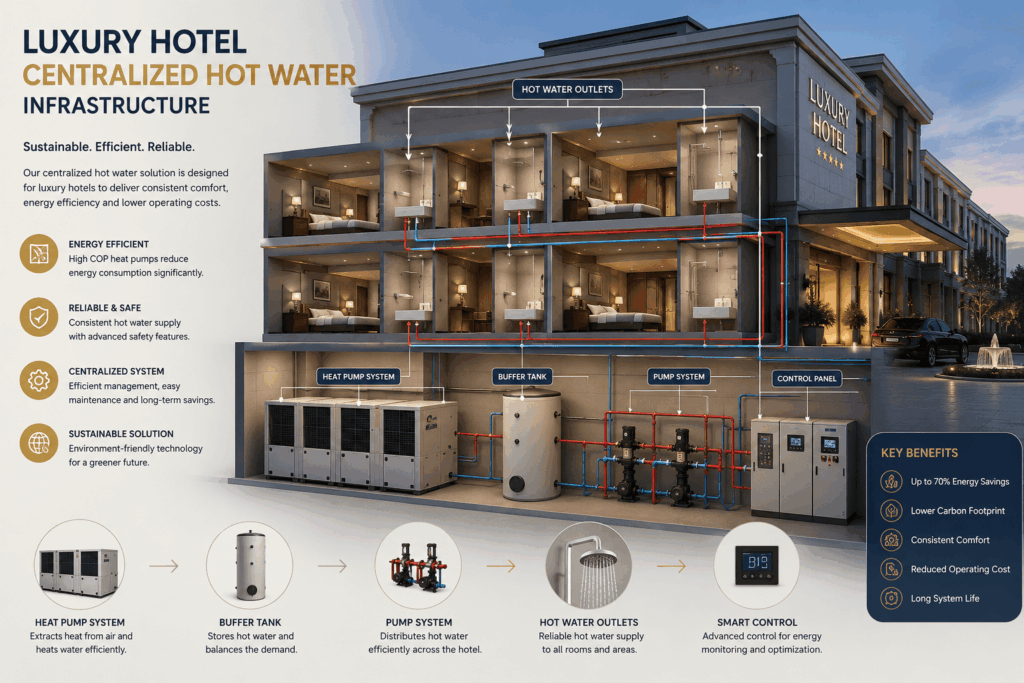
What Is a Hotel Heat Pump Water Heater?
A hotel heat pump water heater is an advanced thermal system that uses ambient air energy to heat water instead of generating heat directly through electric resistance or fossil fuel combustion.
Unlike conventional water heaters, a commercial heat pump system transfers heat rather than producing it. This makes it significantly more energy-efficient and environmentally sustainable.
In simple terms:
- Traditional heaters create heat
- Heat pumps move existing heat
- Less electricity is consumed
- Higher efficiency is achieved
A modern commercial water heating solution typically includes:
- Heat pump compressor
- Evaporator coil
- Condenser
- Water storage tank
- Smart control system
- Circulation pumps
- Insulated piping network
Hotels increasingly prefer these systems because they support:
- Centralized hot water supply
- Reduced operating cost
- Sustainable infrastructure development
- Smart energy management
- Long equipment lifespan
How Heat Pump Technology Works in Hotels
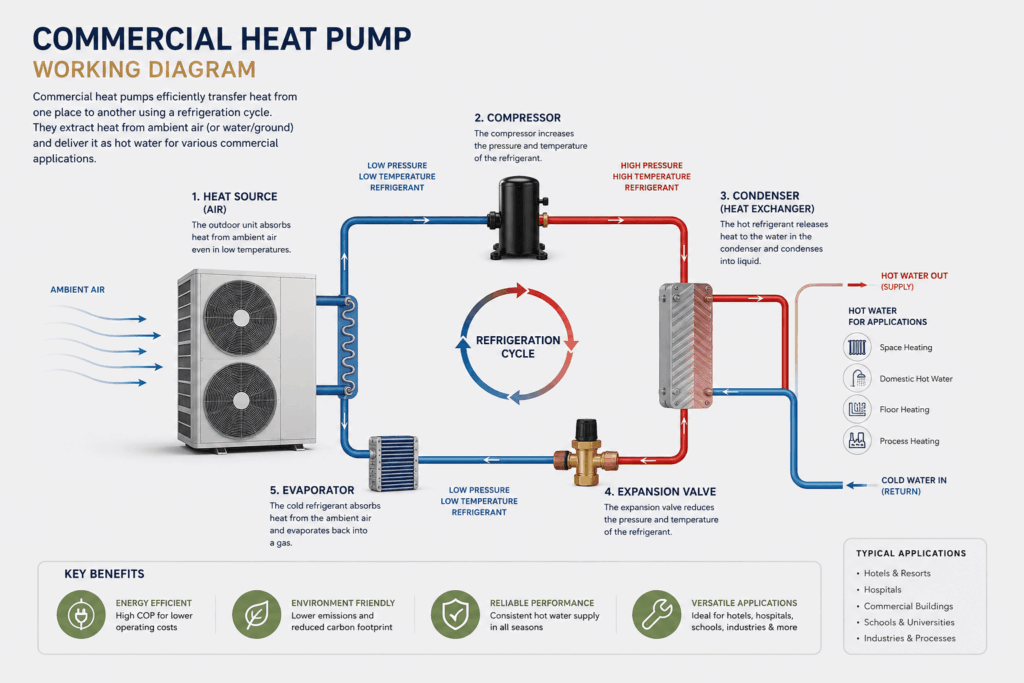
The working principle behind heat pump systems is based on thermal energy transfer.
Step-by-Step Process
- Ambient air is absorbed through the evaporator.
- Refrigerant captures heat from the air.
- The compressor increases refrigerant temperature.
- Heat transfers to water through the condenser.
- Heated water is stored and circulated across hotel facilities.
This process consumes far less electricity compared to conventional heating systems.
Why This Matters for Hotels
Hotels require:
- Continuous hot water
- Stable temperature control
- High-capacity operation
- Energy optimization
A commercial heat pump system fulfills all these operational requirements efficiently.
Why Hotels Face High Hot Water Electricity Costs
Many hospitality businesses underestimate how much electricity hot water systems consume.
Common Energy Challenges in Hotels
| Operational Area | Energy Consumption Impact |
| Guest Bathrooms | Extremely High |
| Laundry Operations | High |
| Kitchen & Dishwashing | High |
| Spa & Wellness Facilities | Very High |
| Swimming Pools | High |
| Staff Accommodation | Moderate |
Traditional systems suffer from:
- Continuous heating cycles
- Heat loss
- Poor insulation
- Inefficient thermal transfer
- High peak electricity demand
As electricity tariffs increase globally, hotels must adopt smarter energy infrastructure.
Types of Heat Pump Systems for Hotels
Different hospitality facilities require different system configurations.
1. Air Source Heat Pumps
The most commonly used solution in hotels.
Benefits
- Lower installation cost
- High efficiency
- Easy maintenance
- Suitable for most climates
Best For
- Mid-size hotels
- Resorts
- Business hotels
2. Water Source Heat Pumps
These systems extract heat from nearby water bodies.
Suitable For
- Luxury resorts
- Waterfront properties
- Large hospitality campuses
3. Hybrid Heat Pump Systems
These combine:
- Solar heating
- Heat recovery
- Heat pumps
- Backup boilers
Best For
- Premium eco hotels
- Green-certified properties
- Large-scale hospitality groups
Industrial Applications of Hotel Heat Pump Systems
Heat pump technology is no longer limited to residential applications.
Today, it is widely integrated into:
- Hospitality infrastructure
- Industrial HVAC integration
- Food processing plants
- Commercial laundry operations
- Thermal processing equipment
- Industrial heat recovery systems
This crossover adoption proves the reliability and scalability of the technology.
Industries That Use Commercial Heat Pump Systems
Hospitality Sector
- Hotels
- Resorts
- Serviced apartments
- Wellness retreats
Healthcare Industry
- Hospitals
- Medical hostels
- Rehabilitation centers
Industrial Sector
- Food processing plants
- Dairy units
- Industrial drying technology facilities
Commercial Buildings
- Educational campuses
- Corporate housing
- Fitness clubs
Key Features of Modern Hotel Heat Pump Systems
Advanced Energy Efficiency
Modern systems achieve high Coefficient of Performance (COP), delivering more heating output with lower power consumption.
Smart Automation
Industrial automation systems enable:
- Temperature scheduling
- Remote monitoring
- Automated circulation control
- Load optimization
Stainless Steel Construction
Industrial-grade stainless steel components improve:
- Hygiene compliance
- Corrosion resistance
- Long-term durability
Low Noise Operation
Ideal for hospitality environments where guest comfort is essential.
Modular Scalability
Hotels can expand system capacity as occupancy grows.
Technical Specifications of Commercial Hotel Heat Pumps
| Specification | Typical Range |
| Heating Capacity | 5 kW – 300 kW |
| Water Temperature | Up to 75°C |
| COP Efficiency | 3.5 – 5.0 |
| Refrigerant Type | Eco-Friendly Refrigerants |
| Tank Capacity | 200L – 10,000L |
| Automation | PLC / Smart Controls |
| Material | SS304 / SS316 |
| Voltage | 220V / 380V / 415V |
Industrial Workflow Integration in Hotels
Modern hospitality businesses increasingly integrate heat pumps into centralized utility systems.
Integrated Components Include:
- Building Management Systems (BMS)
- Solar thermal systems
- Industrial HVAC infrastructure
- Smart water circulation systems
- Energy monitoring dashboards
This improves:
- Operational visibility
- Energy tracking
- Predictive maintenance
- Centralized thermal management
Benefits of Heat Pump Technology for Hotels
1. Massive Electricity Savings
Hotels can reduce water heating electricity consumption by up to 70%.
Why Savings Are So High
Heat pumps consume less power because they transfer heat instead of generating it directly.
2. Lower Operational Costs
Reduced electricity demand means:
- Lower monthly utility bills
- Improved profit margins
- Faster infrastructure ROI
3. Sustainable Hotel Operations
Modern travelers increasingly prefer eco-conscious hotels.
Heat pump systems support:
- Green certifications
- ESG initiatives
- Carbon reduction targets
- Eco hotel infrastructure development
4. Reliable 24/7 Hot Water Supply
Commercial systems are designed for continuous operation.
This ensures:
- Consistent guest experience
- Stable temperature output
- Reduced downtime
5. Long Equipment Life
Industrial-grade systems typically last significantly longer than traditional heaters.
Energy Efficiency Benefits
How Hotels Reduce Electricity Bills
Hotels using conventional electric heaters often face:
- High peak load charges
- Increased maintenance costs
- Unstable energy performance
Heat pumps solve these issues through:
- Lower electricity draw
- Better thermal retention
- Heat recovery optimization
- Smart operational scheduling
Example Scenario
| System Type | Monthly Energy Cost |
| Traditional Electric Heater | Very High |
| Boiler-Based System | High |
| Heat Pump Water Heater | Significantly Lower |
ROI & Cost-Saving Benefits
For hotel owners, ROI is one of the biggest decision factors.
Major Cost Advantages
- Reduced electricity bills
- Lower maintenance frequency
- Reduced boiler fuel dependency
- Lower manpower requirements
- Lower carbon compliance costs
Typical ROI Period
Most hotels recover investment within 2–4 years depending on:
- Occupancy levels
- Hot water demand
- Electricity tariff structure
- Existing infrastructure
After ROI recovery, the savings continue for years.
Productivity & Operational Improvements
Heat pump systems improve overall operational performance.
Operational Advantages
- Reduced manual intervention
- Better temperature consistency
- Lower system downtime
- Automated energy management
- Improved guest satisfaction
For hotel management teams, this means fewer operational disruptions and better service reliability.
Heat Pump vs Traditional Hotel Water Heating Systems
| Feature | Traditional Boiler | Electric Heater | Heat Pump System |
| Electricity Consumption | High | Very High | Low |
| Operating Cost | High | High | Low |
| Carbon Emissions | High | Moderate | Low |
| Automation | Limited | Basic | Advanced |
| Maintenance | Frequent | Moderate | Lower |
| Scalability | Moderate | Limited | Excellent |
| Sustainability | Low | Moderate | High |
Advantages and Disadvantages of Hotel Heat Pumps
Advantages
- Major energy savings
- Eco-friendly operation
- Lower carbon footprint
- Long-term durability
- Centralized hot water management
- Smart automation integration
- Lower operational expenses
Disadvantages
- Higher initial investment
- Requires professional installation
- Space planning needed for large systems
However, long-term savings typically outweigh upfront costs.
Buying Guide: Choosing the Right Hotel Heat Pump System
1. Capacity Planning
Evaluate:
- Number of rooms
- Peak occupancy
- Laundry demand
- Kitchen usage
2. Material Quality
Choose industrial-grade stainless steel for durability and hygiene.
3. Automation Features
Look for:
- Smart controls
- Remote monitoring
- Energy analytics
4. Energy Efficiency Ratings
Higher COP values deliver better savings.
5. Maintenance Accessibility
Choose systems with accessible service design.
6. Scalability
Hotels should plan future expansion capacity.
7. Safety Standards
Ensure compliance with:
- Electrical safety regulations
- Pressure vessel standards
- Thermal insulation norms
Common Mistakes Hotels Should Avoid
Oversizing or Undersizing Systems
Incorrect sizing leads to inefficiency.
Ignoring Insulation Quality
Poor insulation increases thermal loss.
Choosing Cheap Components
Low-quality materials increase downtime risk.
Lack of Preventive Maintenance
Even advanced systems require regular inspection.
Ignoring Integration Planning
Heat pumps should integrate with the hotel’s broader HVAC and utility infrastructure.
Maintenance Tips for Long-Term Performance
Recommended Best Practices
- Clean filters regularly
- Inspect refrigerant pressure
- Check circulation pumps
- Monitor water scaling
- Perform thermal efficiency testing
- Inspect automation controls
Preventive maintenance improves:
- System lifespan
- Energy performance
- Operational stability
Future Trends in Hotel Heat Pump Technology
The hospitality industry is rapidly adopting intelligent energy infrastructure.
Emerging Innovations
- AI-powered energy optimization
- IoT-enabled monitoring
- Smart manufacturing integration
- Solar-assisted heat pumps
- Industrial heat recovery systems
- Predictive maintenance analytics
Future-ready hotels are prioritizing:
- Sustainability
- Automation
- Energy resilience
- Smart utility management
Why Choose ET Solutions
ET Solutions provides advanced industrial thermal and energy-efficient processing systems designed for commercial and industrial applications.
Why Hospitality Businesses Trust ET Solutions
- Industrial engineering expertise
- Energy-efficient thermal solutions
- Customized system design
- Commercial-grade reliability
- Technical consultation support
- Installation guidance
- Long-term service support
- Scalable commercial infrastructure solutions
Their expertise in:
- Industrial HVAC integration
- Commercial thermal systems
- Smart energy infrastructure
- Industrial automation
- Heat recovery technology
makes them a strong partner for hospitality businesses seeking sustainable growth.
Conclusion
For hotels and hospitality businesses, reducing energy consumption is no longer optional. Rising electricity costs, sustainability goals, and guest expectations are forcing the industry to adopt smarter infrastructure solutions.
A modern hotel heat pump water heater system offers:
- Up to 70% electricity savings
- Lower operational costs
- Sustainable infrastructure development
- Reliable hot water supply
- Better long-term ROI
Hotels that invest in energy-efficient thermal systems today position themselves for stronger profitability, improved operational resilience, and long-term competitive advantage.
To explore customized commercial heat pump solutions for hotels, resorts, and hospitality projects, contact ET Solutions for expert consultation, technical guidance, and tailored energy-saving solutions.
FAQs
Heat pump water heaters are considered one of the most energy-efficient and cost-effective systems for hotels due to lower electricity consumption and long-term savings.
Yes. Heat pumps are ideal for hotels because they provide continuous hot water while significantly reducing electricity bills.
Hotels can reduce hot water electricity consumption by up to 70% depending on system design and usage patterns.
Hotels, hospitals, food processing plants, resorts, and industrial facilities commonly use commercial heat pump systems.
Industrial-grade systems can last 10–20 years with proper maintenance.
Yes. They reduce carbon emissions and support eco hotel infrastructure initiatives.
Yes. They are commonly integrated into centralized hot water systems in hotels and large commercial buildings.
Routine maintenance includes filter cleaning, refrigerant inspection, pump checks, and system efficiency monitoring.
In many cases, yes. Heat pumps generally provide lower operational costs and better energy efficiency than traditional boilers.
Hotels should evaluate capacity, automation, material quality, energy efficiency, scalability, and maintenance requirements.
Contact Us: EcoTech Solutions