

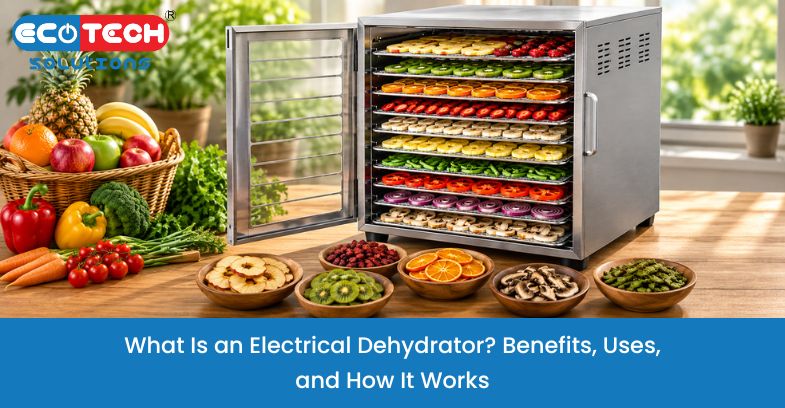
Food preservation has come a long way from traditional sun drying. Today, businesses and households rely on advanced drying equipment to preserve food safely while maintaining its nutritional value. If you’ve ever wondered what is an electrical dehydrator, you’re not alone. As the demand for healthy, preservative-free foods continues to grow, electrical dehydrators have become an essential tool for food processing and long-term storage.
Whether you’re a home cook, farmer, food manufacturer, or commercial business, understanding what is an electrical dehydrator can help you choose the right solution for drying fruits, vegetables, herbs, spices, meat, and other food products.
If you’re looking for high-quality dehydration equipment, ET Solutions is a trusted Heat Pump Manufacturer offering energy-efficient drying solutions for residential and commercial applications.
What Is an Electrical Dehydrator?
The first question many people ask is, what is an electrical dehydrator?
Simply put, what is an electrical dehydrator? It is a machine designed to remove moisture from food using controlled heat and continuous airflow. Unlike traditional drying methods that depend on sunlight and weather conditions, an electrical dehydrator provides consistent temperature and ventilation to produce evenly dried food.
Understanding what is an electrical dehydrator is important because proper dehydration helps preserve food naturally without relying heavily on artificial preservatives. Moisture is one of the primary causes of bacterial growth, mold, and spoilage. By removing water content, dehydrated foods last significantly longer while retaining their flavor, nutrients, and texture.
Today, electrical dehydrators are widely used in:
- Food processing industries
- Restaurants
- Hotels
- Farms
- Spice manufacturers
- Herbal processing units
- Home kitchens
Knowing what is an electrical dehydrator allows businesses to improve food quality while reducing waste and increasing shelf life.
How Does an Electrical Dehydrator Work?
Many people also ask, how does an electrical dehydrator work?
The answer is quite simple. How does an electrical dehydrator work begins with a heating element that generates warm air inside the drying chamber. A built-in fan circulates this warm air evenly across every tray, allowing moisture to evaporate gradually.
The drying process follows these steps:
- Fresh food is washed and sliced.
- Food is arranged evenly on drying trays.
- The desired temperature is selected.
- Warm air circulates continuously.
- Moisture exits through air vents.
- Food dries evenly while preserving nutrients.
This explains how does an electrical dehydrator work efficiently without exposing food to dust, insects, or changing weather conditions.
Modern machines also include digital temperature controls, timers, and adjustable airflow systems to optimize drying performance.
Benefits of Using an Electrical Dehydrator
There are numerous benefits of using an electrical dehydrator for both household and commercial food preservation.
1. Longer Shelf Life
One of the biggest benefits of using an electrical dehydrator is extending the shelf life of fruits, vegetables, herbs, and meat by removing moisture that causes spoilage.
2. Preserves Nutritional Value
Unlike high-temperature cooking methods, dehydration uses controlled heat that helps retain many essential vitamins, minerals, and antioxidants.
3. Reduces Food Waste
Fresh produce often spoils before it can be consumed. One of the key benefits of using an electrical dehydrator is reducing food waste by preserving seasonal fruits and vegetables for future use.
4. Saves Storage Space
Dehydrated food occupies much less space than fresh produce, making transportation and storage easier.
5. Natural Food Preservation
Electrical dehydration requires no chemical preservatives, allowing consumers to enjoy healthier foods.
Overall, the benefits of using an electrical dehydrator make it a valuable investment for food businesses and households alike.
Uses of Electric Dehydrator
The uses of electric dehydrator extend across many industries because different food products require efficient moisture removal.
Some common uses of electric dehydrator include:
Drying Fruits
Apples, bananas, mangoes, pineapples, strawberries, grapes, and oranges can all be dehydrated while maintaining their natural sweetness.
Drying Vegetables
Tomatoes, carrots, onions, spinach, mushrooms, potatoes, peas, and beans can be stored for months after dehydration.
Drying Herbs
Mint, basil, oregano, parsley, rosemary, coriander, and thyme retain their aroma when properly dehydrated.
Drying Spices
Turmeric, ginger, garlic, chili peppers, and curry leaves can be dried efficiently.
Meat and Fish
Electrical dehydrators are commonly used for preparing jerky and preserving seafood products.
These examples demonstrate the wide uses of electric dehydrator across residential kitchens and commercial food industries.
Electric Dehydrator Machine for Commercial Applications
An electric dehydrator machine is an excellent investment for commercial operations that require consistent production.
Industries using an electric dehydrator machine include:
- Fruit processing companies
- Vegetable exporters
- Herbal manufacturers
- Spice industries
- Snack manufacturers
- Organic food brands
- Agricultural businesses
A high-capacity electric dehydrator machine provides consistent drying quality, lower operating costs, and higher productivity compared to traditional drying methods.
Different Types of Electrical Dehydrators
Selecting the right dehydrator depends on production capacity.
6 Tray Electrical Dehydrator
Small businesses, startups, restaurants, and home-based food manufacturers can benefit from the 6 Tray electrical dehydrator, which offers efficient drying with a compact footprint.
24 Tray Electrical Dehydrator
Large-scale food processing facilities often require greater production capacity. The 24 tray electrical dehydrator is designed for commercial operations that need consistent, high-volume drying while maintaining product quality.
Foods That Can Be Dehydrated
One of the advantages of understanding what is an electrical dehydrator is realizing how versatile it is.
You can dehydrate:
- Apples
- Mangoes
- Pineapple
- Bananas
- Strawberries
- Blueberries
- Tomatoes
- Carrots
- Mushrooms
- Spinach
- Garlic
- Ginger
- Onion
- Herbs
- Chili peppers
- Meat
- Fish
- Pet treats
The variety of products makes electrical dehydrators suitable for numerous industries.
Why Businesses Prefer Electrical Dehydrators
Commercial food producers increasingly choose electrical dehydrators because they offer:
- Consistent drying quality
- Lower labor costs
- Reduced product loss
- Better hygiene
- Uniform drying
- Energy-efficient operation
- Faster production
- Improved product quality
- Longer storage life
These advantages make electrical dehydration one of the most reliable food preservation methods available today.
Tips for Using an Electrical Dehydrator
To achieve the best results:
- Wash food thoroughly before drying.
- Slice food into equal sizes.
- Avoid overcrowding trays.
- Maintain recommended drying temperatures.
- Rotate trays if necessary.
- Store dried food in airtight containers.
- Keep the dehydrator clean after every use.
Following these practices helps maximize drying efficiency and food quality.
Choosing the Right Electrical Dehydrator
When selecting an electrical dehydrator, consider:
- Tray capacity
- Temperature control
- Airflow system
- Energy efficiency
- Material quality
- Ease of cleaning
- Digital controls
- Maintenance requirements
- Production volume
Choosing the correct model ensures reliable performance for years.
Conclusion
If you’ve been asking what is an electrical dehydrator, the answer is simple: it is an efficient food preservation machine that removes moisture using controlled heat and airflow to extend shelf life while maintaining food quality.
Understanding how does an electrical dehydrator work helps businesses and homeowners appreciate its ability to preserve fruits, vegetables, herbs, spices, meat, and many other products safely and naturally. The numerous benefits of using an electrical dehydrator, including reduced food waste, improved storage, nutrient retention, and energy-efficient operation, make it an excellent investment for modern food processing.
From small businesses to large commercial manufacturers, the wide uses of electric dehydrator continue to expand as demand for healthy, preservative-free foods increases. Whether you need a compact electric dehydrator machine or a larger commercial model, ET Solutions offers dependable drying solutions backed by industry expertise.
Explore ET Solutions’ range of dehydration equipment, including the 6 Tray Electrical Dehydrator and 24 Tray Electrical Dehydrator, to find the ideal solution for your food preservation needs.
Contact Us: EcoTech Solutions