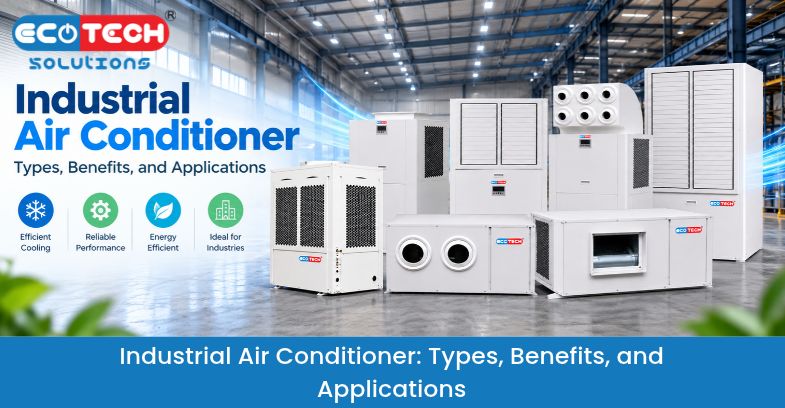
Industrial cooling plays an important role in maintaining comfortable working environments, protecting machinery, and supporting efficient production. Factories, warehouses, manufacturing plants, food-processing facilities, and commercial buildings often generate significant heat during daily operations. Without proper temperature management, excessive heat can affect equipment performance, product quality, employee comfort, and operational efficiency.
An industrial air conditioner is designed to manage the cooling requirements of large spaces and demanding industrial environments. Unlike conventional residential air conditioners, industrial cooling equipment may be engineered to handle larger areas, higher heat loads, continuous operation, and specific environmental conditions.
Choosing the right cooling solution requires an understanding of available technologies, operating requirements, energy consumption, maintenance needs, and installation costs. This guide explains the main types of industrial cooling systems, their benefits, applications, and the factors businesses should consider before investing.
What Is an Industrial Air Conditioner?
An industrial air conditioner is a cooling system designed to control temperature and, depending on the system, humidity and air quality in industrial or large commercial environments. These systems are selected according to the size of the facility, the amount of heat generated by equipment, the number of occupants, and the required operating conditions.
An industrial cooling installation may use refrigeration-based air conditioning, evaporative cooling, or a combination of different technologies. The appropriate option depends on the local climate, indoor humidity, ventilation requirements, and the level of temperature control needed.
For example, a manufacturing plant with heat-generating machinery may require a high-capacity cooling system. A warehouse with good ventilation and a suitable dry climate may benefit from evaporative cooling. A temperature-sensitive production area may require more precise refrigeration-based cooling.
Businesses should evaluate these requirements before selecting an industrial air conditioning system to ensure that the equipment meets their operational needs.
Types of Industrial Air Conditioning Systems
Different facilities require different cooling technologies. Understanding the main options can help businesses identify a suitable solution for their premises.
1. Refrigeration-Based Industrial Cooling Systems
Refrigeration-based systems use a refrigeration cycle to remove heat from indoor air and transfer it outside. They generally include components such as compressors, evaporators, condensers, and expansion devices.
These systems are useful where controlled indoor temperatures are important. Depending on their design and capacity, they can support manufacturing operations, laboratories, server rooms, production areas, and other environments that require consistent cooling.
Before choosing this technology, businesses should assess the required cooling capacity, energy consumption, installation space, refrigerant requirements, and expected operating hours.
2. Industrial Evaporative Air Conditioners
An industrial evaporative air conditioner cools air by using the natural process of water evaporation. Warm outdoor air passes through water-saturated cooling media, where evaporation reduces its temperature before the air enters the building.
This technology can be particularly useful in hot, relatively dry climates where outdoor air can be introduced into a facility and humid air can be exhausted. Evaporative cooling systems typically use less electricity for the cooling process than conventional compressor-based air conditioning, although actual savings depend on system design and operating conditions.
Evaporative cooling is often considered for factories, workshops, warehouses, production floors, and other large spaces where ventilation and fresh-air circulation are important.
However, its performance depends on outdoor humidity. It is generally less effective in humid weather and increases indoor humidity, so it may not suit every industrial process.
Businesses exploring this option can learn more about ET Solutions’ Evaporative Industrial Air Conditioner solutions.
3. Central Industrial Air Conditioning Systems
Central systems distribute conditioned air throughout a building using ductwork, air-handling equipment, and associated cooling components. They can serve large facilities with multiple rooms or production areas that require coordinated temperature control.
Central cooling may be appropriate for large office complexes, commercial buildings, industrial facilities, and certain manufacturing environments.
The design must account for the building layout, airflow distribution, heat load, filtration requirements, and maintenance accessibility. Properly designed ductwork and controls are essential for avoiding uneven cooling and unnecessary energy consumption.
4. Packaged Air Conditioning Units
Packaged air conditioning units combine major cooling components in a single enclosure. Depending on their configuration and capacity, they may be installed on rooftops, beside buildings, or in other suitable locations.
These units can be considered for workshops, commercial facilities, industrial spaces, and buildings where a packaged installation is more practical than a larger central system.
Businesses should compare available capacities, installation requirements, service access, operating noise, and energy performance before making a decision.
5. Industrial Cooling and Ventilation Systems
Some industrial facilities need a combination of cooling and ventilation rather than precise air conditioning alone. High-volume ventilation systems, exhaust fans, and industrial air cooling equipment can help remove accumulated heat and introduce fresh air.
These systems may be suitable for workshops, warehouses, assembly areas, and manufacturing plants with significant internal heat generation.
The right design depends on the building’s air volume, heat sources, outdoor conditions, and process requirements. Ventilation and cooling should be planned together to achieve effective airflow without creating unnecessary energy losses.
Key Benefits of Industrial Air Conditioning
Investing in an appropriately designed cooling system can offer several operational advantages.
1. Improved Workplace Comfort
Excessive heat can make industrial workplaces uncomfortable, particularly during summer and in facilities with heat-generating equipment. Effective cooling can help create a more comfortable working environment for employees.
Temperature management should be considered alongside ventilation, hydration, suitable work practices, and other workplace safety measures.
2. Better Equipment Performance
Certain machines and electronic components perform best within specified temperature ranges. Excessive heat can contribute to overheating, unplanned shutdowns, and premature component wear.
A properly selected cooling system can help maintain suitable environmental conditions for equipment. However, sensitive machinery may require dedicated process cooling or precision temperature control rather than general-purpose air conditioning.
3. Support for Product Quality
Temperature and humidity can affect the quality of materials and finished products. Industries such as food processing, electronics manufacturing, pharmaceuticals, and specialized production may have specific environmental requirements.
A suitable cooling strategy can help maintain these conditions, provided the system is designed around the relevant process specifications.
4. Improved Air Circulation
Many industrial cooling solutions introduce or circulate air to reduce heat buildup. When combined with suitable ventilation and filtration, these systems can contribute to better indoor air management.
Air circulation alone does not remove every airborne contaminant. Facilities handling dust, fumes, chemicals, or other pollutants may need dedicated extraction, filtration, and industrial hygiene controls.
5. Potential Energy Savings
Selecting a cooling technology that matches the climate and facility requirements can reduce unnecessary energy use. For example, evaporative cooling may be advantageous in dry climates, while refrigeration-based systems may be more suitable when precise temperature control is essential.
Energy efficiency also depends on equipment sizing, insulation, maintenance, airflow design, controls, and operating schedules. A professional assessment can help identify opportunities to reduce operating costs.
6. Support for Continuous Operations
Industrial processes may operate for extended hours, making reliability an important consideration. Choosing equipment that matches the facility’s heat load and operating schedule can help reduce cooling-related disruptions.
Preventive maintenance, appropriate controls, and access to qualified service support are also essential for reliable performance.
Common Applications of Industrial Air Cooling
Industrial cooling serves a wide range of sectors. The ideal technology varies according to the process, facility layout, and environmental conditions.
Manufacturing Plants
Manufacturing facilities may contain motors, furnaces, production machinery, and other heat-generating equipment. A carefully planned cooling system helps manage indoor heat and supports suitable working conditions.
Warehouses and Distribution Centres
Warehouses can experience heat accumulation because of large roof areas, limited air movement, and continuous loading activities. Industrial cooling and ventilation can help manage these conditions.
Evaporative systems may be appropriate where the climate and humidity requirements permit their use.
Food Processing Facilities
Food-processing environments often require careful control of temperature, hygiene, and humidity. Different production stages may need different cooling technologies, so businesses should assess the specific food safety and process requirements before selecting equipment.
Textile and Printing Industries
Textile production and printing operations can generate heat and may require particular humidity conditions. The cooling system should be selected according to the machinery, materials, and process specifications.
Automotive and Engineering Workshops
Automotive facilities and engineering workshops may experience heat from machinery, welding, production equipment, and vehicle movement. Appropriate ventilation and cooling can help manage these conditions.
Electronics and Technical Facilities
Electronics manufacturing and technical environments may require stable temperatures to protect sensitive equipment and maintain production quality. These applications may need precision cooling rather than general industrial ventilation.
Industrial Air Conditioner Price: What Determines the Cost?
The industrial air conditioner price can vary significantly depending on the technology, cooling capacity, installation complexity, and operating requirements. There is no single price that applies to every industrial facility.
The following factors commonly influence the total investment:
- Cooling capacity: Larger heat loads generally require higher-capacity equipment and supporting infrastructure.
- Cooling technology: Evaporative cooling, packaged systems, and refrigeration-based installations have different equipment and operating costs.
- Facility size: Building dimensions, ceiling height, insulation, occupancy, and machinery heat output affect system selection.
- Installation requirements: Ductwork, electrical connections, water supply, drainage, structural supports, and ventilation modifications can add to project costs.
- Energy efficiency: More efficient equipment may have a higher initial cost but can reduce energy expenses over time, depending on usage.
- Maintenance requirements: Filter replacement, cleaning, water treatment where applicable, inspections, and servicing should be included in lifecycle cost estimates.
- Operating conditions: Continuous operation, high ambient temperatures, dust, and corrosive environments may require specialized equipment.
When requesting quotations, businesses should compare the complete project scope rather than focusing only on the equipment purchase price. A useful quotation should clarify the cooling capacity, included accessories, installation work, expected energy use, warranty, and service arrangements.
How to Choose the Right Industrial Cooling Solution
Selecting the correct system involves more than comparing product specifications. Businesses should begin with a clear understanding of their operational requirements.
1. Assess the Cooling Load
Estimate the heat generated by machinery, lighting, occupants, solar exposure, and other sources. Cooling capacity should be determined using an appropriate heat-load assessment rather than building area alone.
2. Evaluate Climate Conditions
Outdoor temperature and humidity influence cooling performance. Evaporative cooling can be effective in dry conditions, while refrigeration-based systems may be preferable where humidity is high or precise temperature control is required.
3. Define Temperature and Humidity Requirements
Some facilities only need relief from excessive heat, while others must maintain specific environmental conditions for product quality or process stability.
Identify the required temperature range and humidity limits before selecting equipment.
4. Consider Energy Consumption
Review the equipment’s efficiency ratings, expected operating hours, and maintenance needs. Compare the estimated lifetime cost of each suitable option rather than considering the initial investment alone.
5. Check Installation and Maintenance Needs
Confirm that the facility has sufficient space, suitable electrical infrastructure, and any required water supply or drainage. Make sure routine maintenance and repairs can be carried out safely.
6. Work With an Experienced Supplier
Industrial cooling projects benefit from a supplier that understands the intended application and can help identify a suitable solution.
Businesses evaluating industrial air conditioner manufacturers in India should compare technical specifications, product suitability, installation support, warranty conditions, and after-sales service. A supplier’s ability to assess the actual cooling requirement is more valuable than selecting equipment based only on a headline capacity or advertised price.
Why Consider ET Solutions for Industrial Cooling?
ET Solutions provides industrial and energy-related equipment solutions for different applications. Businesses researching industrial cooling can explore the company’s product information to understand which options may suit their facility.
Start by reviewing the Evaporative Industrial Air Conditioner page to learn more about this cooling category. For broader information about the company and its equipment offerings, visit ET Solutions – Heat Pump Manufacturer.
Before purchasing, share details about your facility size, location, operating hours, heat sources, ventilation requirements, and desired indoor conditions. These details can help determine whether evaporative cooling, refrigeration-based air conditioning, or a combined approach is appropriate.
Conclusion
Choosing the right industrial cooling technology can help businesses manage heat, maintain suitable working conditions, and support reliable operations. The best solution depends on the facility’s heat load, climate, required temperature control, energy priorities, and maintenance capabilities.
Options range from refrigeration-based air conditioning and central systems to packaged units and evaporative cooling. Each technology has specific advantages and limitations, making a careful assessment essential.
Businesses should evaluate the complete cost of ownership, including installation, energy consumption, maintenance, and service support. By matching the cooling system to the actual application, industrial facilities can make more informed investment decisions and build a practical long-term cooling strategy.
Frequently Asked Questions (FAQs)
1. What is an industrial air conditioner?
An industrial air conditioner is a cooling system designed for factories, warehouses, manufacturing plants, and other large or demanding environments. It may use refrigeration, evaporative cooling, or another suitable technology depending on the application.
2. What are the main types of industrial air conditioning systems?
Common types include refrigeration-based systems, evaporative coolers, central air conditioning systems, packaged units, and industrial cooling and ventilation systems. The best option depends on the facility’s climate, heat load, and temperature-control requirements.
3. What is an industrial evaporative air conditioner?
An industrial evaporative air conditioner uses water evaporation to reduce the temperature of incoming air. It is often useful in hot, dry environments where fresh-air ventilation is practical, but its performance decreases as outdoor humidity rises.
4. What factors affect industrial air conditioner price?
The price depends on cooling capacity, equipment type, energy efficiency, installation requirements, building size, electrical infrastructure, and additional components. Businesses should compare installation costs and long-term operating expenses when evaluating quotations.
5. How do I choose between evaporative cooling and conventional air conditioning?
Evaporative cooling is often suitable for hot, dry environments that can accommodate increased indoor humidity. Conventional refrigeration-based air conditioning is generally more appropriate when precise temperature control or dehumidification is necessary. A site assessment can help identify the suitable option.
6. How can I find reliable industrial air conditioner manufacturers in India?
Compare manufacturers and suppliers based on application experience, equipment specifications, cooling capacity, energy performance, installation support, warranty terms, and after-sales service. Request a proposal that addresses your facility’s actual operating conditions.
7. Which industries benefit from industrial air cooling?
Manufacturing, warehousing, automotive engineering, textiles, printing, and certain food-processing facilities can benefit from industrial cooling. The required technology depends on the heat generated and the environmental conditions needed for each process.
8. Does industrial cooling help reduce energy costs?
It can, when the system is correctly sized, suitable for the climate, and properly maintained. Energy-efficient equipment, effective airflow, suitable controls, and preventive maintenance can help reduce unnecessary consumption. Actual savings depend on the facility and its operating conditions.
9. How often should industrial cooling equipment be maintained?
Maintenance frequency depends on the equipment type, operating hours, dust levels, water quality, and manufacturer recommendations. Regular inspections, cleaning, and timely servicing help maintain performance and identify potential problems early.
Contact Us: EcoTech Solutions