
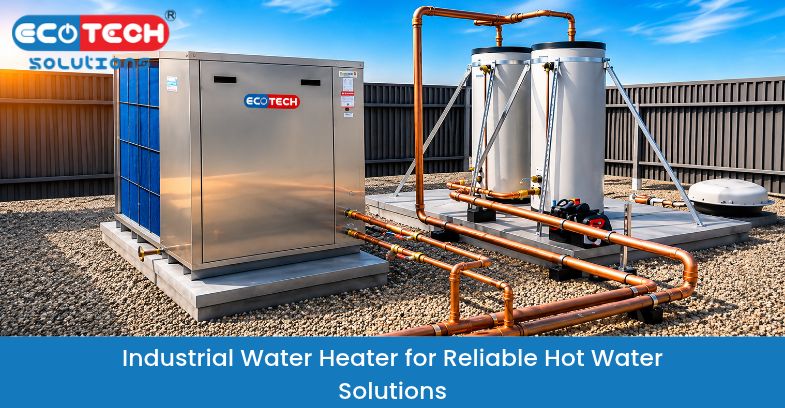
Industries across different sectors depend on a consistent supply of hot water to maintain production efficiency, hygiene, cleaning standards, and daily operations. From food processing and pharmaceutical manufacturing to textile production, hotels, hospitals, and commercial facilities, hot water plays an essential role in numerous industrial processes. Choosing the right heating system can help businesses improve operational performance, manage energy consumption, and maintain reliable production schedules.
An industrial water heater is designed to meet the high-volume hot water requirements of industrial and commercial facilities. Unlike conventional residential water heaters, industrial systems are developed to handle larger capacities, demanding operating conditions, and continuous heating requirements. With advancements in heat pump technology, businesses can now explore energy-efficient alternatives to conventional water heating methods.
EcoTech Solutions provides advanced heat pump technologies designed to support residential, commercial, and industrial heating requirements. Its industrial heating solutions focus on dependable hot water generation, energy efficiency, and sustainable operation.
What Is an Industrial Water Heater?
An industrial water heater is a heating system designed to generate and supply hot water for manufacturing processes, cleaning, sanitation, washing, and other commercial or industrial applications. These systems are available in different configurations depending on the required water temperature, heating capacity, energy source, and operating conditions.
Industrial facilities often require large quantities of hot water throughout the day. Therefore, the heating equipment must deliver consistent performance while maintaining the required temperature and supply volume.
Modern systems may use different heating technologies, including:
- Electric water heaters: Use electrical resistance elements to heat water directly.
- Gas-fired water heaters: Generate heat through gas combustion.
- Steam-based heating systems: Transfer heat from steam to water through suitable equipment.
- Heat pump water heaters: Extract thermal energy from the surrounding air or another heat source and transfer it to water.
- Solar-assisted systems: Use solar energy to support water heating requirements.
Each technology has different installation requirements, operating costs, and performance characteristics. Businesses should select a suitable system after evaluating their actual heating demand.
Why Industries Need Reliable Hot Water Solutions
Reliable hot water is essential for maintaining smooth industrial operations. In many facilities, even a short interruption in hot water availability can affect production schedules, cleaning activities, and workplace efficiency.
Here are some important reasons why businesses should invest in dependable heating systems.
1. Consistent Production Operations
Many manufacturing processes require water at specific temperatures. Industries such as food processing, pharmaceuticals, chemicals, and textiles depend on controlled heating for different production activities.
A properly designed heating system helps maintain the required temperature and ensures that hot water is available when needed. This supports smoother workflows and reduces unnecessary production interruptions.
2. Improved Cleaning and Sanitation
Hot water is widely used for cleaning machinery, production equipment, storage tanks, floors, and processing areas. Food processing plants and healthcare facilities may also require controlled hot water for sanitation-related activities.
A reliable heating system helps businesses maintain consistent cleaning operations and meet their applicable hygiene requirements.
3. Better Energy Management
Heating water can contribute significantly to the energy consumption of industrial facilities. Conventional heating methods may require considerable electricity or fuel, particularly when hot water is needed for extended operating hours.
Modern heat pump technology offers an alternative by transferring available thermal energy rather than generating all the heat through electrical resistance. This can help reduce energy consumption when the system is correctly selected and installed.
4. Reduced Operational Interruptions
Industrial operations often follow strict production schedules. An unreliable heating arrangement can delay washing, processing, and other activities.
Selecting appropriate capacity, storage, controls, and maintenance arrangements helps ensure that the heating system supports daily operational requirements.
How Heat Pump Technology Improves Industrial Water Heating
Heat pump technology is becoming an important option for businesses looking to improve heating efficiency. Instead of producing heat entirely through conventional electrical resistance, a heat pump captures thermal energy from its surroundings or another available source and transfers it to water.
The basic operating process includes four major stages:
- Heat absorption: The evaporator absorbs thermal energy from the surrounding air or an appropriate heat source.
- Compression: The refrigerant passes through a compressor, increasing its temperature and pressure.
- Heat transfer: The hot refrigerant transfers heat to the water through a heat exchanger.
- Expansion: The refrigerant pressure is reduced before it returns to the evaporator, allowing the cycle to continue.
This process enables heat pumps to deliver more thermal energy than the electrical energy they consume under suitable operating conditions.
Businesses considering advanced Industrial Heat Pump technology can explore systems designed for high-temperature water generation and demanding industrial applications.
EcoTech Solutions offers industrial heat pump systems capable of delivering hot water up to 90°C, depending on the selected model and operating conditions. These systems are designed for applications that require dependable high-temperature water for production, cleaning, washing, and sanitation.
Major Applications of Industrial Water Heating Systems
Different industries have different hot water requirements. The correct heating technology depends on the process, water volume, temperature range, and daily operating hours.
1. Food Processing Industry
Food processing facilities use hot water for equipment cleaning, washing, production activities, and sanitation. Maintaining appropriate water temperatures is important for supporting hygiene procedures and operational consistency.
A suitable heating system can provide a dependable hot water supply for processing areas, cleaning stations, and other facility requirements.
2. Pharmaceutical Industry
Pharmaceutical manufacturing requires carefully controlled production environments and cleaning procedures. Hot water may be required for equipment cleaning, washing, and other approved manufacturing processes.
The heating system should be selected according to the facility’s temperature, water quality, and regulatory requirements.
3. Textile and Garment Industry
Textile manufacturing facilities use hot water for washing, dyeing, fabric processing, and cleaning activities. Different processes may require different temperature levels and water quantities.
An appropriately designed system can support consistent heating and help textile businesses manage their energy requirements.
4. Chemical Manufacturing
Chemical industries may require heated water for mixing, processing, cleaning, and temperature-controlled operations. Since different chemical processes have specific requirements, the heating system must be selected with careful attention to material compatibility and process safety.
5. Hotels and Hospitals
Hotels require hot water for guest rooms, kitchens, laundry facilities, and housekeeping. Hospitals need hot water for cleaning, laundry, sanitation, and other facility operations.
Centralized heating systems can help these establishments manage high-volume demand and maintain a dependable supply across different areas.
6. Industrial Laundry Facilities
Commercial and industrial laundries use hot water for washing, cleaning, and other laundry processes. A dependable heating arrangement supports continuous operation and helps businesses manage their daily workload.
Key Factors to Consider When Selecting Industrial Water Heating Equipment
Selecting the right heating technology requires more than comparing equipment prices. Businesses should evaluate their complete hot water requirements before making a purchase.
The following factors can help with the selection process.
- Heating Capacity
Determine how much hot water the facility consumes per hour or per day. Consider peak demand, the number of operating shifts, and the possibility of future expansion.
- Required Water Temperature
Different industrial processes require different water temperatures. Identify the required temperature range before choosing the heating system.
- Energy Efficiency
Compare the expected energy consumption of different technologies. Evaluate performance under actual operating conditions rather than relying only on advertised efficiency figures.
- Storage and Distribution
Consider whether the facility needs a storage tank, direct hot water supply, or a centralized distribution arrangement. Properly designed insulation and piping can also reduce heat losses.
- Installation Space
Check the available installation area, ventilation requirements, piping arrangements, electrical connections, and access for servicing.
- Maintenance Requirements
Regular inspection and maintenance help maintain system performance. Consider the availability of technical support, replacement components, and servicing facilities.
- Safety and Temperature Controls
The system should include suitable temperature controls, pressure protection, electrical safety provisions, and other safeguards according to its design and application.
Benefits of Choosing Advanced Industrial Heating Technology
Investing in modern heating technology can provide several operational and financial advantages when the system is appropriately designed.
- Energy efficiency: Heat pump technology can reduce electricity consumption compared with conventional resistance heating under suitable operating conditions.
- Reliable performance: Properly selected systems can support continuous hot water requirements.
- Lower operating expenses: Improved energy utilization can help businesses manage long-term heating costs.
- Temperature control: Digital controllers can help maintain the required water temperature.
- Environmental benefits: Using ambient thermal energy can reduce dependence on conventional fossil-fuel-based heating.
- Flexible applications: Different configurations can support manufacturing, cleaning, washing, and centralized hot water systems.
- Long-term value: Appropriate installation and maintenance can support dependable equipment operation over its service life.
The actual benefits depend on the operating environment, system capacity, inlet water temperature, required outlet temperature, and maintenance practices.
How to Choose the Right Industrial Water Heater Manufacturer
Selecting a suitable supplier is an important step in purchasing industrial heating equipment. Businesses should evaluate the manufacturer’s technical knowledge, product range, installation capabilities, and after-sales support.
Here are some important considerations:
- Technical experience: Look for an industrial water heater manufacturer with relevant experience in commercial and industrial heating applications.
- Product specifications: Review heating capacity, operating temperature, energy consumption, and system configuration.
- Customization: Check whether the company can recommend a solution based on your facility’s specific requirements.
- Quality and safety: Understand the materials, components, safety features, and applicable standards used in the equipment.
- Installation support: Professional installation and commissioning are important for achieving reliable system performance.
- After-sales service: Check the availability of technical assistance, maintenance guidance, and spare parts.
When comparing industrial water heater manufacturers in India, businesses should consider technical suitability and long-term operating value rather than selecting equipment based only on its initial purchase price.
Working with an experienced Industrial Water Heater supplier can also make it easier to evaluate capacity requirements, installation conditions, and system integration.
Why Choose EcoTech Solutions for Industrial Heating Requirements?
EcoTech Solutions specializes in energy-efficient heat pump technologies for residential, commercial, and industrial applications. Based in Ahmedabad, Gujarat, the company provides heating solutions designed to address different hot water and process heating requirements.
Its industrial heat pump technology is designed to deliver high-temperature hot water up to 90°C, making it suitable for several demanding applications. Features include high-capacity heating, advanced compressor technology, digital temperature controls, and energy-efficient operation.
Businesses exploring heating equipment can consider the following solutions:
- Industrial Heat Pumps: Designed for high-temperature hot water generation and industrial process heating.
- Domestic Heat Pumps: Suitable for residential hot water requirements. Explore Domestic Heat Pump options.
- Industrial Heating Systems: Solutions designed around industrial process requirements, heating capacity, and energy management.
As an experienced Heat Pump Manufacturer, EcoTech Solutions focuses on delivering efficient and sustainable thermal technologies for different industries.
You can also explore the company’s complete range of Industrial Heating Solutions to understand the available technologies and applications. For more information about its products and services.
Industrial Water Heater Manufacturers in India: What Businesses Should Compare
India has a growing industrial sector with diverse heating requirements across manufacturing, hospitality, healthcare, food processing, and other industries. Businesses searching for industrial water heater manufacturers in India should carefully compare available solutions before finalizing an equipment supplier.
A practical comparison should include:
- Heating capacity and daily hot water output.
- Maximum operating temperature.
- Energy consumption and expected operating costs.
- Equipment dimensions and installation requirements.
- Compatibility with existing water storage and piping systems.
- Warranty coverage and maintenance support.
- Availability of technical assistance.
- Possibility of future capacity expansion.
Do not assume that one heating technology is suitable for every industrial application. A heat pump may be an excellent choice for facilities with suitable operating conditions and temperature requirements, while other applications may need a different or hybrid heating arrangement.
The right Industrial Water Heater supplier should understand the facility’s actual needs and recommend an appropriate system rather than offering a standard solution without evaluating the application.
Maintenance Tips for Long-Term Heating Performance
Regular maintenance helps protect equipment performance and supports reliable hot water availability.
Consider these maintenance practices:
- Inspect the heating system periodically for leaks, unusual sounds, or visible damage.
- Clean filters and other components according to manufacturer recommendations.
- Check water quality and manage scaling where necessary.
- Inspect electrical connections and safety controls.
- Monitor operating temperatures and system performance.
- Check pumps, valves, piping, and insulation.
- Arrange professional servicing at recommended intervals.
For heat pump systems, the refrigerant circuit and compressor should be inspected by qualified technicians. Proper maintenance can help identify potential issues before they affect daily operations.
Frequently Asked Questions (FAQs) – Industrial Water Heater
1. What is an industrial water heater?
An industrial water heater is a heating system designed to supply hot water for manufacturing, cleaning, washing, sanitation, and other industrial processes. It supports high-volume hot water requirements in factories and commercial facilities.
2. How does an industrial water heater work?
An industrial water heater uses electricity, gas, steam, or heat pump technology to heat water. Heat pump systems absorb thermal energy from the surrounding environment and transfer it to water through a refrigerant cycle.
3. What are the main applications of industrial water heaters?
Industrial water heaters are commonly used in food processing, pharmaceutical manufacturing, textile production, chemical industries, hotels, hospitals, and commercial laundry facilities.
4. What are the benefits of using an industrial heat pump water heater?
Industrial heat pump water heaters can offer improved energy efficiency, reduced operating costs, reliable hot water generation, and lower dependence on conventional fuel-based heating systems.
5. How do I choose the right industrial water heater?
Consider heating capacity, daily hot water consumption, required water temperature, energy efficiency, installation space, storage requirements, and maintenance support before selecting a system.
6. What temperature can an industrial heat pump water heater achieve?
The achievable temperature depends on the equipment model and operating conditions. Certain advanced industrial heat pump systems, including EcoTech Solutions’ offerings, are designed to deliver hot water up to 90°C.
7. How can I find reliable industrial water heater manufacturers in India?
Compare manufacturers based on product quality, heating capacity, energy efficiency, technical expertise, customization options, warranty, installation support, and after-sales service.
Conclusion
Reliable hot water is an important requirement for modern industrial and commercial facilities. From food processing and pharmaceutical production to textile manufacturing, hospitals, hotels, and industrial laundries, businesses need heating systems that can meet their operational demands consistently.
Choosing the right heating technology involves evaluating water consumption, temperature requirements, heating capacity, energy efficiency, installation conditions, and long-term maintenance needs. Advanced heat pump technology offers an energy-efficient alternative for many applications by utilizing available thermal energy to generate hot water.
EcoTech Solutions provides industrial heat pump technology designed for dependable high-temperature water generation and industrial heating requirements. Businesses looking to improve their heating infrastructure can explore its solutions and consult the technical team to identify a suitable system for their applications.
Contact Us: EcoTech Solutions