

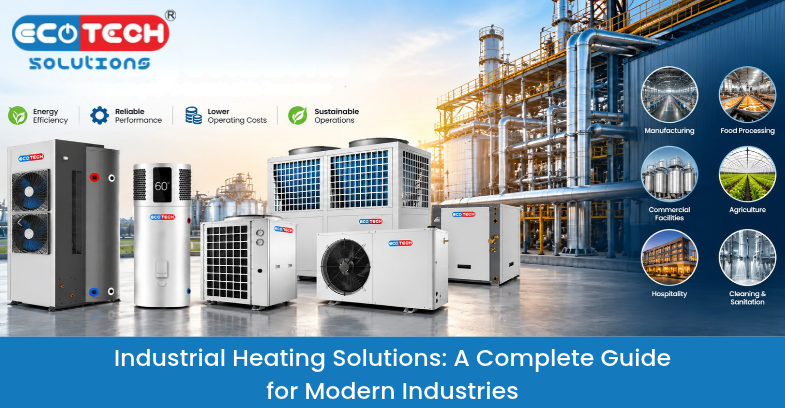
Modern industries depend on reliable heating technologies for manufacturing, processing, drying, water heating, temperature control, and several other operations. As energy costs continue to influence operating budgets, businesses are increasingly looking for efficient ways to generate and manage heat without compromising productivity. This has made industrial heating solutions an important consideration for factories, processing facilities, commercial buildings, food businesses, and other energy-intensive operations.
An effective heating strategy involves more than simply selecting a heating unit. Businesses need to consider the required temperature, operating hours, heat demand, available energy sources, installation requirements, maintenance, and long-term operating costs. Selecting the right technology can help businesses achieve consistent performance while supporting their sustainability and energy-management objectives.
What Are Industrial Heating Solutions?
Industrial heating solutions are technologies, systems, and equipment designed to generate, transfer, maintain, or manage heat for industrial and commercial applications. Depending on the industry, heating may be required for hot water production, process heating, drying, sanitation, manufacturing, food processing, or temperature-sensitive operations.
Unlike residential heating, industrial applications can involve significantly higher heat loads and longer operating periods. Therefore, the heating system must be selected according to the facility’s specific requirements.
A suitable solution should provide:
- Reliable heat generation
- Consistent temperature control
- Efficient energy utilization
- Appropriate heating capacity
- Safe and dependable operation
- Reasonable maintenance requirements
- Compatibility with the existing facility
- Long-term operational value
The right approach depends on the application rather than using the same heating technology for every facility.
Why Industries Need Efficient Heating Systems
Heating can represent a significant portion of energy consumption in many industrial operations. Manufacturing facilities, food-processing businesses, hotels, commercial buildings, and other facilities may require hot water or process heat for several hours each day.
Traditional heating methods can sometimes involve substantial energy consumption, particularly when equipment operates continuously or when heat is generated at temperatures higher than necessary.
Modern industrial heating systems can help businesses evaluate heat demand more effectively and improve overall energy utilization. Technologies designed around efficient heat transfer can reduce unnecessary energy use while maintaining the required operating temperature.
Energy efficiency can also become increasingly important as businesses focus on sustainability and reducing operating expenses. A well-designed heating system can support both objectives by using energy more effectively.
Types of Industrial Heating Technologies
There are several approaches to industrial heating, and the most suitable option depends on the required temperature and application.
Heat Pump-Based Heating
Heat pump technology transfers available heat from one source to another rather than relying entirely on direct fuel combustion. This approach can be useful for applications where businesses require hot water or controlled heating.
Modern heat pump technology can be designed for different operating conditions, capacities, and temperature requirements. Businesses can evaluate these systems based on heat demand, operating environment, and expected usage.
Electric Heating
Electric heating equipment converts electrical energy into heat. It can be suitable for applications where precise temperature control and straightforward operation are important.
However, the overall operating economics depend on electricity prices, equipment efficiency, operating schedules, and the required temperature.
Waste Heat Recovery
Some industrial processes generate heat that would otherwise be released into the environment. Heat recovery technologies can capture and reuse a portion of this energy for applications such as water heating or preheating.
Waste heat recovery can therefore become an important component of a broader energy-efficiency strategy.
Hybrid Heating Approaches
Some facilities may benefit from combining multiple technologies. A hybrid system can be designed around the facility’s load profile, operating schedule, and temperature requirements.
The objective is to use the appropriate technology for each part of the heating demand rather than relying on a single approach in every operating condition.
Key Applications of Industrial Heating Solutions
Different industries have different thermal requirements. Some common applications include:
Manufacturing
Manufacturing facilities may require heat for production processes, cleaning, hot water, equipment operation, or material treatment. The heating requirement can vary substantially depending on the manufacturing process.
Food Processing
Food-processing facilities often require hot water and controlled temperatures for cleaning, sanitation, preparation, and processing. Reliable heating can help maintain consistent operating conditions.
Hospitality and Commercial Facilities
Hotels, restaurants, healthcare facilities, and large commercial buildings may have substantial hot-water requirements. Efficient heating technologies can help these businesses manage recurring energy consumption.
Agriculture and Food Drying
Heat is also used in drying and dehydration processes. Controlling temperature and airflow can be important for maintaining product quality and achieving consistent results.
Industrial Cleaning and Sanitation
Facilities that require frequent cleaning may consume considerable amounts of hot water. Efficient heating can support these operations while helping businesses manage energy consumption.
Choosing the Right Industrial Heating Equipment
Selecting suitable industrial heating equipment requires an understanding of the facility’s actual heat requirements.
Before choosing equipment, businesses should evaluate several factors.
1. Required Temperature
Determine the minimum and maximum temperatures required by the application. A system designed for low-temperature hot water may not be suitable for a high-temperature process.
2. Heating Capacity
Calculate the required heating capacity based on peak demand rather than simply average demand. Undersized equipment may struggle during periods of high usage.
3. Operating Hours
Facilities operating continuously have different requirements from businesses operating for only a few hours each day. Equipment efficiency becomes particularly important for long operating schedules.
4. Energy Source
The available energy source should be evaluated alongside operating costs, infrastructure, and environmental objectives.
5. Available Space
Equipment dimensions and installation requirements should be considered before selecting a system. Adequate space should also be available for maintenance and servicing.
6. Maintenance Requirements
Businesses should understand routine maintenance requirements, component availability, service requirements, and expected operating conditions before making an investment.
7. Long-Term Operating Costs
Purchase price is only one part of the overall investment. Businesses should consider energy consumption, maintenance, downtime, replacement requirements, and expected operating life.
Industrial Heating and Cooling Systems
Some facilities require heating during certain periods and cooling during others. In such cases, industrial heating and cooling systems can provide a more integrated approach to temperature management.
Heating and cooling requirements may occur in different parts of a production process or during different seasons. Understanding the complete thermal profile can help businesses select technologies that operate efficiently across changing conditions.
For facilities considering combined temperature management, it is useful to examine:
- Heating and cooling load requirements
- Seasonal operating conditions
- Required temperature ranges
- Heat recovery opportunities
- Equipment capacity
- Control requirements
- Available installation space
An integrated approach can help avoid designing separate systems without considering how they interact.
Improving Energy Efficiency Through Better Heating Design
Energy efficiency should be considered during the planning stage rather than after equipment installation. Businesses can examine where heat is generated, where it is used, and where energy losses occur.
Several strategies can support better performance:
- Insulating hot-water pipes and storage tanks
- Reducing unnecessary heat loss
- Matching equipment capacity with demand
- Using temperature controls
- Scheduling equipment according to demand
- Recovering usable waste heat
- Maintaining heat-transfer components
- Monitoring energy consumption
- Selecting efficient technologies
For businesses looking at long-term energy management, ET Solutions provides information about Energy Efficiency and sustainable approaches for industrial applications.
Role of Controls and Monitoring
Modern heating installations can benefit from monitoring and control technologies. Temperature sensors, flow monitoring, timers, and automated controls can help businesses understand how equipment is operating.
Monitoring can identify:
- Unnecessary operating periods
- Temperature fluctuations
- Excessive energy consumption
- Equipment performance changes
- Potential maintenance requirements
Data collected over time can also help businesses compare actual performance against expected performance.
Industrial Heating Equipment and System Sizing
Correct sizing is one of the most important considerations when purchasing industrial heating equipment. An oversized system may cycle unnecessarily, while an undersized system may not meet peak demand.
Sizing should take into account:
- Peak hot-water demand
- Required temperature increase
- Operating hours
- Ambient conditions
- Storage requirements
- Production schedules
- Future expansion plans
Professional assessment can help businesses determine the appropriate capacity and configuration before installation.
Heat Pumps as an Energy-Efficient Option
Heat pump technology has gained attention in commercial and industrial applications because it can transfer heat rather than generating all heat directly through combustion or resistance.
The appropriate application depends on temperature requirements, source conditions, operating profile, and system design.
For residential and smaller-scale requirements, the Domestic Heat Pump range provides another application category.
For larger business and commercial requirements, businesses can also explore Commercial Heat Pumps.
Sustainability and Industrial Heating
Sustainability is increasingly becoming part of business planning. Companies are examining ways to reduce energy consumption, improve resource utilization, and lower environmental impact while maintaining productivity.
Efficient heating can contribute to these objectives by reducing unnecessary energy use and making better use of available thermal energy.
However, sustainability should be considered alongside practical requirements. A heating technology needs to meet the facility’s temperature, capacity, reliability, and operational requirements before its environmental benefits can be evaluated meaningfully.
Maintenance of Industrial Heating Systems
Regular maintenance is essential for keeping industrial heating systems operating reliably.
Maintenance programs may include:
- Inspecting electrical connections
- Checking sensors and controls
- Cleaning relevant components
- Inspecting pumps and circulation systems
- Checking insulation
- Monitoring temperature performance
- Inspecting water connections
- Reviewing energy consumption
- Addressing unusual operating conditions
Preventive maintenance can help identify potential problems before they result in unexpected downtime.
How to Evaluate a Heating Solution
Before investing in industrial heating solutions, businesses should create a clear evaluation process.
Start by documenting the current heating demand. Identify how much heat is required, when it is required, and at what temperature.
Next, examine the existing equipment. Determine whether the main problem is insufficient capacity, inefficient operation, heat loss, outdated equipment, or poor control.
After that, compare available technologies based on:
- Required temperature
- Heating capacity
- Energy consumption
- Installation requirements
- Maintenance
- Operating costs
- Available space
- Expected usage
- Future expansion
This structured approach makes it easier to identify a solution that fits the actual application rather than selecting equipment based only on its initial purchase price.
Future Trends in Industrial Heating
The industrial heating sector is increasingly focused on efficiency, electrification, heat recovery, automation, and sustainability.
Businesses are exploring technologies that can reduce energy waste while maintaining reliable production. Heat pumps, advanced controls, monitoring technologies, and heat recovery systems can all play roles in this transition.
Another important trend is the integration of heating with broader facility energy management. Instead of treating heating as an isolated system, businesses can analyze heating alongside electricity consumption, cooling, ventilation, production schedules, and other energy loads.
This broader perspective can identify opportunities for better overall energy performance.
Conclusion
Modern businesses need heating technologies that balance performance, reliability, energy consumption, and long-term operating requirements. From manufacturing and food processing to commercial hot-water applications, the right heating approach depends on the facility’s specific thermal demands.
Effective industrial heating solutions begin with understanding the application, determining the required temperature and capacity, evaluating energy sources, and considering long-term operating requirements.
Businesses should also look beyond the initial equipment cost and consider efficiency, maintenance, controls, heat recovery, installation, and future expansion. When these factors are evaluated together, organizations can develop a heating strategy that supports both operational needs and energy-management objectives.
As industries continue to focus on efficient resource utilization and sustainable operations, modern heating technologies will remain an important part of industrial energy planning. A carefully designed system can help businesses manage heat demand while supporting reliable and efficient operations.
FAQs About Industrial Heating Solutions
1. What are industrial heating solutions?
Industrial heating solutions are technologies and systems designed to provide heat for manufacturing, processing, hot-water production, drying, sanitation, and other industrial applications. They can include heat pump-based systems, electric heating, heat recovery, and other heating technologies.
2. How do industrial heating systems improve energy efficiency?
Industrial heating systems can improve efficiency by using energy more effectively, reducing heat loss, matching heating capacity to demand, and incorporating controls or heat recovery. Proper insulation and regular maintenance can also support efficient operation.
3. What industries use industrial heating equipment?
Industrial heating equipment is used across manufacturing, food processing, hospitality, agriculture, commercial facilities, cleaning and sanitation, and other industries that require controlled heat or hot water.
4. How do I choose the right industrial heating solution?
Consider the required temperature, heating capacity, operating hours, energy source, available installation space, maintenance requirements, and long-term operating costs. Professional system sizing can help ensure the equipment matches the facility’s actual requirements.
5. What is the difference between heating and industrial heating and cooling systems?
Heating systems primarily provide thermal energy, while industrial heating and cooling systems can manage both heating and cooling requirements. Combined systems may be useful for facilities that have changing temperature-control needs throughout the year.
Contact Us: EcoTech Solutions