
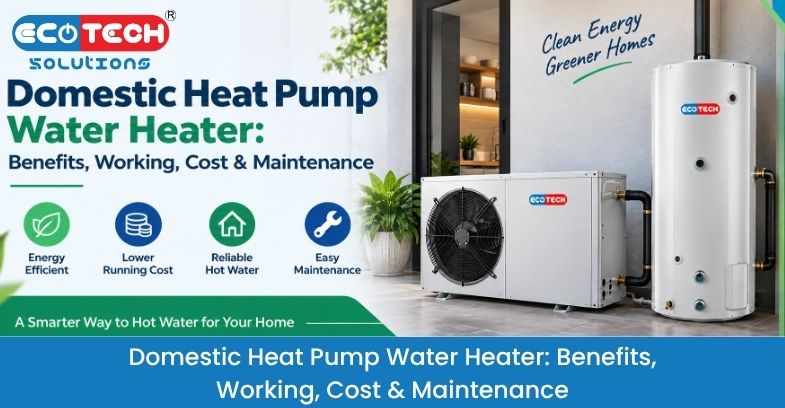
As homeowners look for more energy-efficient ways to produce hot water, heat pump technology has become an increasingly practical alternative to conventional electric water heaters. A domestic heat pump water heater uses heat from the surrounding air and transfers it to water instead of generating heat directly through traditional electrical resistance. This approach can reduce energy consumption while providing a reliable supply of hot water for everyday household needs.
Unlike a conventional geyser, which primarily converts electricity directly into heat, a heat pump moves existing heat from one place to another. This makes the technology particularly useful for homes where hot water is required regularly. With suitable installation, insulation, and maintenance, a heat pump water heating system can provide consistent performance and help manage long-term operating costs.
What Is a Domestic Heat Pump?
If you are wondering what is a domestic heat pump, it is a system designed to heat water by extracting thermal energy from the surrounding air. The system uses components such as a compressor, evaporator, condenser, and expansion device to transfer heat into a water storage tank.
The basic principle is similar to that used by an air conditioner or refrigerator, but the purpose is different. Instead of removing heat from an indoor space, the heat pump captures available heat from the air and transfers it to water.
A typical system can be connected to a storage tank so that heated water remains available when required. This makes it suitable for applications such as bathing, cleaning, kitchens, hotels, apartments, and other residential requirements.
For households considering this technology, the Domestic Heat Pump solution from EcoTech provides a dedicated option for domestic hot water applications.
How Does a Domestic Heat Pump Water Heater Work?
Understanding how does a domestic heat pump water heater work starts with understanding heat transfer. The system does not need to create all the heat required for water heating from electricity. Instead, it captures heat available in the surrounding air and uses a refrigeration cycle to increase its temperature.
The process generally involves the following stages:
1. Heat Absorption
The evaporator absorbs thermal energy from the surrounding air. Even when the air does not feel particularly warm, it contains usable thermal energy. A refrigerant inside the heat pump absorbs this energy and changes state.
2. Compression
The refrigerant then moves to the compressor. The compressor increases the pressure of the refrigerant, which also increases its temperature. This creates a high-temperature refrigerant that can transfer heat to the water.
3. Heat Transfer to Water
The hot refrigerant passes through a heat exchanger or condenser. Here, heat is transferred from the refrigerant to the water stored in the tank.
4. Refrigerant Expansion
After releasing its heat, the refrigerant passes through an expansion device. Its pressure and temperature decrease, allowing it to return to the evaporator and repeat the cycle.
5. Hot Water Storage
The heated water remains in the storage tank until it is needed. Proper insulation helps minimize heat loss and keeps the water warm for longer.
So, how does a domestic heat pump water heater work in practical terms? It uses electricity primarily to operate the compressor and other components while obtaining a significant portion of the heating energy from the surrounding air.
Benefits of a Domestic Heat Pump Water Heater
A domestic heat pump water heater can offer several advantages compared with conventional water-heating technologies.
Improved Energy Efficiency
One of the primary advantages is energy efficiency. A heat pump transfers heat rather than relying solely on electrical resistance to generate heat. This can allow the system to deliver more heating energy than the amount of electricity it consumes.
The actual efficiency depends on factors such as ambient temperature, water temperature, installation conditions, system capacity, and operating settings.
Lower Long-Term Operating Costs
Because heat pumps can use electricity more efficiently than conventional resistance water heaters, households with regular hot water demand may benefit from lower operating expenses over time.
The initial purchase and installation cost can be higher than that of a basic electric geyser, so the overall value should be considered over the expected operating life rather than only by comparing upfront prices.
Consistent Hot Water Supply
When paired with an appropriately sized storage tank, a heat pump can provide hot water for regular household activities. Choosing the correct tank capacity is important because an undersized system may not meet peak demand, while an oversized system can increase unnecessary equipment and installation costs.
Reduced Energy Consumption
Energy consumption is an important consideration for modern households. Since the system transfers available heat instead of producing all heat directly through resistance heating, it can potentially reduce electricity use for hot water production.
For a more detailed explanation of operating efficiency, see Heat Pump Water Heater: How It Saves Energy and Reduces Hot Water Costs.
Suitable for Different Residential Applications
Domestic heat pump systems can be considered for houses, villas, apartments, guest accommodations, and other residential settings. They can be particularly useful where hot water is required regularly throughout the day.
Environmentally Conscious Heating
Reducing electricity consumption can also help reduce the indirect environmental impact associated with energy use. The overall environmental benefit depends on the electricity source, system efficiency, installation, and operating conditions.
Domestic Heat Pump Water Heater in India
The demand for energy-efficient heating solutions has increased as households and businesses look for ways to manage electricity consumption. A domestic heat pump water heater in India can be considered for homes that require regular hot water and want an alternative to conventional electric heating.
Climate conditions are an important factor when selecting a system. Heat pumps generally perform differently depending on ambient temperature, humidity, water inlet temperature, and desired hot water temperature.
For a domestic heat pump water heater in India, proper sizing and installation are therefore important. The system should be selected according to the number of users, daily hot water consumption, available installation space, required water temperature, and local environmental conditions.
Indian households may also have different hot water requirements depending on region and season. A system suitable for a small family may not be appropriate for a large household or a property with high hot water demand.
When comparing manufacturers and suppliers, it is useful to consider equipment specifications, tank capacity, compressor technology, heat exchanger design, warranty, service support, and installation requirements rather than looking only at the purchase price.
Domestic Heat Pump Water Heater Cost
The cost of a domestic heat pump water heater in India can vary considerably depending on the system’s capacity, components, technology, storage tank size, installation requirements, and manufacturer.
A basic comparison based only on the purchase price may not provide a complete picture. Conventional electric water heaters may have a lower initial cost, while heat pump systems can offer potential savings through improved energy efficiency during operation.
When evaluating the cost, consider:
- Equipment purchase price
- Storage tank capacity
- Installation charges
- Plumbing modifications
- Electrical requirements
- Insulation and piping
- Maintenance expenses
- Electricity consumption
- Expected operating life
- Warranty and after-sales service
The right system should be selected according to actual household demand. For example, a small family may not need the same capacity as a large household with multiple bathrooms.
Factors That Affect Heat Pump Water Heater Performance
Several factors influence the efficiency and performance of a heat pump system.
- Ambient Temperature
The temperature of the surrounding air affects how much heat the system can extract. Performance can vary between different seasons and geographic locations.
- Water Temperature
Higher target water temperatures generally require more energy and can affect operating efficiency. The desired temperature should therefore be selected according to the household’s requirements.
- Tank Insulation
Good insulation helps prevent heat loss from stored hot water. Poor insulation can increase the amount of energy required to maintain water temperature.
- System Sizing
Correct sizing is essential. A system that is too small may struggle during periods of high demand, while an unnecessarily large system can result in higher upfront costs.
- Installation Location
Adequate airflow around the heat pump is important. Installation should follow the manufacturer’s requirements for clearance, ventilation, drainage, electrical connections, and plumbing.
Maintenance of a Domestic Heat Pump Water Heater
Regular maintenance can help maintain performance and extend equipment life. Although maintenance requirements vary between systems, homeowners should follow the manufacturer’s recommended schedule.
- Clean Air Filters
If the system includes an air filter, it should be inspected and cleaned according to the manufacturer’s instructions. A dirty filter can restrict airflow and reduce performance.
- Inspect the Heat Exchanger
The heat exchanger should be checked periodically for dirt, scaling, corrosion, or other issues. The appropriate cleaning procedure depends on the equipment design.
- Check Water Connections
Inspect water inlet and outlet connections for leaks. Any unusual moisture, dripping, or pressure-related issue should be addressed promptly.
- Inspect the Tank
The storage tank should be checked for signs of corrosion, leakage, or insulation deterioration. Proper maintenance can help prevent larger problems.
- Check Electrical Components
Electrical connections, controls, sensors, and safety devices should be inspected by a qualified technician where required. Electrical servicing should not be performed by unqualified individuals.
- Monitor Unusual Sounds
Changes in operating noise can sometimes indicate a mechanical issue. Unusual sounds, vibration, or repeated system shutdowns should be investigated rather than ignored.
How to Choose the Right Domestic Heat Pump
Before purchasing a system, start by calculating your household’s approximate daily hot water requirement. Consider the number of people living in the home, bathing habits, kitchen usage, bathrooms, and peak demand periods.
Next, compare the following specifications:
- Heating capacity
- Tank capacity
- Operating temperature
- Compressor type
- Energy efficiency
- Heat exchanger design
- Required installation space
- Electrical requirements
- Warranty
- Service availability
- Manufacturer reputation
If you are researching what is a domestic heat pump and whether it is suitable for your home, reviewing these specifications can help you make a more informed decision.
It is also worth considering who will install and service the equipment. Working with an experienced Heat Pump Manufacturer can help ensure that the selected system matches the intended application.
Heat Pump vs Conventional Geyser
A conventional electric geyser generally uses an electrical heating element to directly heat water. A heat pump, on the other hand, transfers heat from the surrounding air into the water.
The two technologies can differ in upfront cost, energy consumption, installation requirements, heating speed, and maintenance. A heat pump may require a larger installation area and more specialized components, while a conventional geyser can be relatively simple to install.
The best choice depends on household requirements, available space, hot water consumption, budget, and long-term operating considerations.
Is a Domestic Heat Pump Water Heater Right for Your Home?
A domestic heat pump water heater can be a suitable option for households that consume hot water regularly and want to explore a more energy-efficient alternative to conventional electric heating.
Before making a purchase, evaluate your daily hot water requirements, installation space, climate, water temperature needs, system capacity, and expected operating costs. Professional installation is also important because correct plumbing, electrical connections, airflow, drainage, and system positioning can influence performance.
For homeowners in India, a domestic heat pump water heater in India can provide an alternative approach to residential hot water production while supporting efforts to manage long-term energy consumption.
Ultimately, the right system depends on the property’s requirements rather than simply choosing the largest or least expensive unit. By comparing efficiency, capacity, installation requirements, maintenance, warranty, and long-term operating costs, homeowners can select a heating solution that better matches their needs.
Final Thoughts
Heat pump technology provides a different approach to residential water heating by transferring available thermal energy from the surrounding air into water. With appropriate sizing, installation, and maintenance, it can provide reliable hot water while potentially reducing electricity consumption compared with conventional resistance heating.
Understanding how does a domestic heat pump water heater work helps homeowners evaluate the technology more effectively. From energy efficiency and operating costs to maintenance and system capacity, several factors should be considered before purchasing.
For households looking for an efficient residential hot water solution, a domestic heat pump water heater can be an option worth evaluating alongside conventional water heating systems.
Contact Us: EcoTech Solutions