
Heat pumps are becoming an important technology for energy-efficient heating in residential, commercial, and industrial applications. Unlike conventional heating systems that generate heat directly by burning fuel or converting electricity into heat, heat pumps transfer existing thermal energy from one location to another. This process can help businesses reduce energy consumption and improve heating efficiency when the system is correctly designed and operated.
Understanding the heat pump working principle helps business owners, facility managers, engineers, and homeowners make informed decisions about heating technology. From domestic hot water production to industrial process heating, heat pumps offer a practical approach to meeting different heating requirements.
In this guide, we explain how heat pumps operate, the components involved, the stages of the heating cycle, and the applications of this technology. We also explore how heat pump water heaters work and the factors that influence their performance.
What Is a Heat Pump?
A heat pump is a mechanical system that transfers thermal energy from a source, such as outdoor air, ground, or water, to a space or fluid that requires heating. It uses electricity to operate components such as a compressor, fans, and circulation pumps.
The technology relies on the movement of heat rather than producing all the required heat through direct electrical resistance or fuel combustion. Under suitable operating conditions, this allows a heat pump to deliver more thermal energy than the electrical energy it consumes.
The heat pump working principle is based on thermodynamics and the properties of a refrigerant. The refrigerant circulates through a closed system, absorbing heat at a lower temperature and releasing it at a higher temperature after its pressure and temperature are increased.
Depending on the system design, a heat pump can provide space heating, water heating, or heat for selected industrial processes.
How Does a Heat Pump Work?
If you are wondering how does a heat pump work, the simplest explanation is that it collects heat from a source, increases the temperature of that heat through a refrigeration cycle, and transfers it to the required destination.
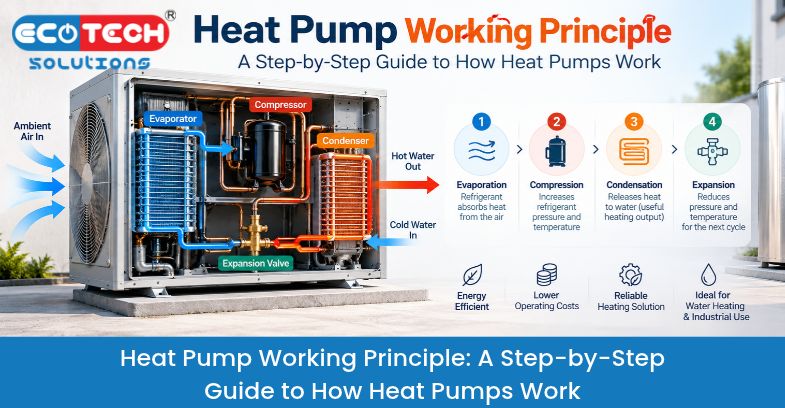
For example, an air-source heat pump extracts thermal energy from outdoor air. A refrigerant absorbs this energy in the evaporator and changes from a liquid into a vapor. The compressor then increases the vapor’s pressure and temperature. In the condenser, the refrigerant releases heat to water or air before passing through an expansion device to begin the cycle again.
This process continues as long as the system operates and its controls call for heating.
The working principle of heat pump systems is therefore closely related to the vapor-compression refrigeration cycle. However, instead of focusing on removing heat from a space, a heating application uses the transferred heat for a useful purpose.
Heat Pump Working Principle: Four Main Steps
The operating cycle consists of four primary stages: evaporation, compression, condensation, and expansion. Each stage performs a specific function in transferring thermal energy.
1. Heat Absorption Through the Evaporator
The process begins in the evaporator, which is a heat exchanger. The refrigerant enters this component at a low pressure and temperature. When it comes into contact with the warmer heat source, it absorbs thermal energy.
In an air-source system, a fan moves outdoor air across the evaporator coil. In other system designs, heat may be collected from water or the ground.
As the refrigerant absorbs energy, it evaporates and becomes a vapor. Heat can be absorbed even from relatively cold air because the refrigerant is selected to operate at suitable temperatures and pressures.
2. Compression of the Refrigerant
The refrigerant vapor then enters the compressor. This component uses electrical energy to compress the vapor, increasing its pressure and temperature.
The resulting high-pressure, high-temperature vapor is capable of releasing heat to a cooler medium in the next stage.
The compressor is one of the most important components because its performance influences the system’s electrical consumption, heating capacity, and overall efficiency.
3. Heat Release Through the Condenser
The hot refrigerant vapor enters the condenser, another heat exchanger. Here, it releases thermal energy to the medium that needs heating.
For a space-heating system, this may be air or water. In a water-heating application, the condenser transfers heat to the water through a suitable heat exchanger.
As the refrigerant loses energy, it condenses from vapor into liquid. The heat released during this stage becomes the useful heating output of the system.
4. Pressure Reduction Through the Expansion Valve
After condensation, the high-pressure liquid refrigerant passes through an expansion valve or another suitable expansion device. This component reduces the refrigerant pressure, causing its temperature to fall.
The cooler refrigerant then returns to the evaporator, where it can absorb more thermal energy.
These four stages repeat continuously during operation. Together, they explain the heat pump working principle and how a relatively small electrical input can support a larger heating output.
Key Components of a Heat Pump System
Understanding the main components makes it easier to understand how the entire system operates.
- Evaporator: Absorbs heat from the surrounding air, water, or ground.
- Compressor: Raises the refrigerant’s pressure and temperature.
- Condenser: Transfers useful heat to the air or water being heated.
- Expansion valve: Reduces refrigerant pressure before the next cycle.
- Refrigerant: Carries thermal energy throughout the system.
- Heat exchangers: Allow heat to move between the refrigerant and the source or destination medium.
- Fans and circulation pumps: Move air or water where the system design requires them.
- Controls and sensors: Monitor temperatures, pressures, and operating conditions to help regulate performance.
The design and sizing of these components affect reliability, energy consumption, and heating capacity. For technical guidance on heat transfer and system operation, explore the Working Principle page from ET Solutions.
Heat Pump Water Heater Working Principle
A heat pump water heater uses the same fundamental thermodynamic cycle but is specifically designed to heat water for domestic, commercial, or industrial use.
The heat pump water heater working principle begins when the evaporator absorbs heat from the surrounding air or another suitable heat source. The compressor increases the refrigerant’s pressure and temperature, allowing the condenser to transfer thermal energy to the water.
The water may be heated in a storage tank or through a designed water-heating arrangement, depending on the equipment. After releasing heat, the refrigerant passes through the expansion device and returns to the evaporator.
Unlike a conventional electric resistance water heater, a heat pump water heater moves heat from a source instead of relying exclusively on direct electrical heating. This can provide a higher heating output per unit of electricity consumed under suitable operating conditions.
The heat pump water heater working principle is particularly relevant for facilities that require a regular supply of hot water, including hotels, commercial buildings, residential properties, and certain industrial operations.
To learn more about this application, visit the Heat Pump Water Heater page.
Understanding the Thermodynamics Behind Heat Pumps
The principle of heat pump operation is based on the fact that heat naturally flows from a warmer region to a cooler region, while mechanical work can enable heat transfer in the opposite direction.
A heat pump uses electricity to operate its compressor and supporting equipment. The refrigerant absorbs energy from the heat source, receives additional energy through compression, and releases thermal energy at a higher temperature.
This relationship can be described using the coefficient of performance (COP).
COP = Useful heating output ÷ Electrical energy input
For example, if a heat pump delivers 4 kWh of heat while consuming 1 kWh of electricity over the same period, its heating COP is 4 under those operating conditions.
This does not mean that the system creates energy. The delivered heat includes energy collected from the surrounding source as well as the work supplied to the system.
The working principle of heat pump technology therefore offers an alternative to direct heating methods in applications where suitable heat sources and operating temperatures are available.
Actual COP varies with source temperature, required output temperature, equipment design, installation, and operating conditions.
Applications of Heat Pump Technology
Heat pumps are used in several sectors because they can transfer heat efficiently when matched to the application.
Residential and Domestic Hot Water
Homes can use heat pumps for water heating and, in suitable systems, space heating and cooling. The appropriate system depends on the local climate, available installation space, household demand, and required water temperature.
Hotels and Commercial Buildings
Hotels, hospitals, gyms, and other facilities may need substantial quantities of hot water throughout the day. Heat pump technology can help meet these requirements while reducing dependence on conventional heating methods.
Industrial Heating Processes
Manufacturing facilities may need hot water or heat for cleaning, washing, drying, and other process operations. The suitable system depends on the required temperature, production schedule, heat source, and process conditions.
Businesses evaluating these applications can explore ET Solutions’ Industrial Heating Solutions for further information.
Energy-Conscious Building Projects
Heat pumps can form part of broader energy-efficiency strategies alongside insulation, heat recovery, temperature controls, and improved building management. Their actual environmental and financial benefits depend on electricity sources, system efficiency, and the alternative heating technology being replaced.
Factors That Affect Heat Pump Efficiency
Although the heat pump working principle remains consistent, the system’s performance changes according to several operating factors.
Source temperature: A warmer heat source generally makes heat transfer easier and may improve efficiency.
Required heating temperature: Raising water or air to a higher target temperature often requires more compressor work.
System sizing: Equipment that is incorrectly sized may struggle to meet demand or operate inefficiently.
Maintenance: Dirty heat exchangers, restricted airflow, refrigerant problems, or malfunctioning components can reduce performance.
Installation quality: Correct piping, insulation, water flow, ventilation, and control settings help the equipment operate as intended.
Operating schedule: Matching heating production to actual demand can help prevent unnecessary energy use.
A proper technical assessment is important before selecting a system, particularly where industrial processes have specific temperature and capacity requirements.
Benefits and Limitations of Heat Pumps
Main Benefits
- Potentially lower electricity consumption than direct electric resistance heating.
- Reduced dependence on onsite fuel combustion when replacing fuel-based heating.
- Ability to use ambient or recovered heat as an energy source.
- Suitability for a range of water-heating and industrial applications.
- Opportunity to support wider energy-management and decarbonization plans.
Important Limitations
- Performance can decrease when the heat source becomes colder or the required output temperature increases.
- Initial equipment and installation costs can be higher than those of some conventional alternatives.
- Certain industrial processes require temperatures or operating conditions that need specialized equipment.
- Space, noise, water quality, maintenance access, and electrical capacity may affect installation decisions.
Evaluating these factors helps determine whether a heat pump is suitable for a specific facility.
How to Choose the Right Heat Pump Solution
Before purchasing a system, assess the application’s heating load, daily operating hours, target temperature, available heat source, and expected hot water or process demand.
Compare heating capacity, rated performance, operating limits, control features, installation requirements, maintenance needs, and warranty coverage. For commercial and industrial projects, consider seasonal operating conditions rather than relying only on a single rated efficiency figure.
Working with an experienced Heat Pump Manufacturer can help businesses identify suitable equipment for their heating requirements. Request technical specifications and confirm that the proposed system can meet the required operating conditions.
Conclusion
The heat pump working principle demonstrates how thermal energy can be transferred from one source to another using a refrigeration cycle and a relatively small amount of electrical energy. Through evaporation, compression, condensation, and expansion, the system collects heat and delivers it where it is needed.
The same process supports water heating, commercial hot water production, and selected industrial applications. Understanding the components, performance factors, and operating requirements helps buyers evaluate whether heat pump technology is appropriate for their needs.
Frequently Asked Questions (FAQs)
1. What is the working principle of heat pump technology?
The working principle of heat pump technology is based on transferring thermal energy using a refrigerant cycle. The refrigerant absorbs heat, is compressed to a higher pressure and temperature, releases heat to the required medium, and then passes through an expansion device to repeat the cycle.
2. How does a heat pump work in cold weather?
A heat pump can absorb thermal energy from cold outdoor air because the air may still contain usable heat. However, efficiency and heating capacity can decrease as the source temperature falls. Some systems use defrost cycles or supplementary heating when necessary.
3. What is the heat pump water heater working principle?
The heat pump water heater working principle involves absorbing heat from air or another source, compressing the refrigerant, and transferring heat through a condenser to water. The refrigerant then expands and returns to the evaporator to repeat the process.
4. Does a heat pump generate heat or transfer it?
A heat pump primarily transfers heat rather than generating all its heating output directly. It uses electricity to move thermal energy from a source to the desired destination, which can allow it to deliver more heat energy than the electricity it consumes.
5. What is the difference between a heat pump and a conventional electric heater?
A conventional electric resistance heater converts electrical energy directly into heat. A heat pump uses electrical energy to transfer heat from another source. Under suitable conditions, a heat pump can provide more heating energy per unit of electricity than resistance heating.
6. What is COP in a heat pump?
COP, or coefficient of performance, is the ratio of useful heating output to electrical energy input over the same period. A higher heating COP indicates more heat delivered per unit of electricity consumed under the measured conditions.
7. Where are heat pumps commonly used?
Heat pumps are used for domestic hot water, commercial buildings, hotels, and selected industrial heating processes. Their suitability depends on the required temperature, heating load, available heat source, climate, and equipment specifications.
Contact Us: EcoTech Solutions