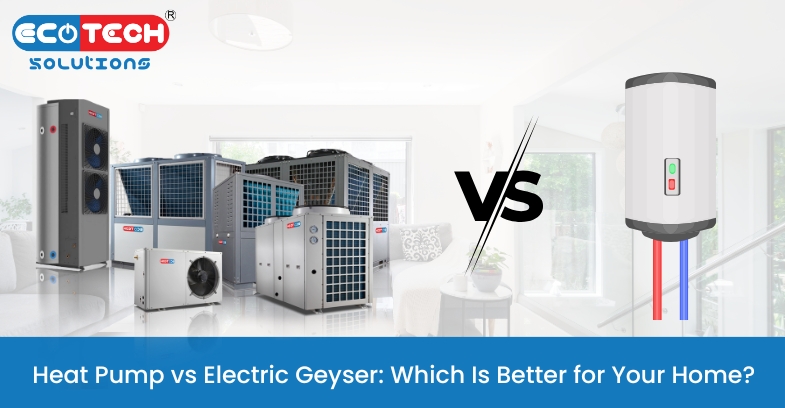
Choosing the right water heating system is an important decision for every homeowner. Whether you are building a new home or replacing an old water heater, you want a solution that delivers reliable hot water, keeps electricity bills under control, and lasts for years. This is where the comparison of a heat pump vs electric geyser becomes essential.
Both systems provide hot water, but they work in completely different ways. An electric geyser heats water directly using electric heating elements, while a heat pump transfers heat from the surrounding air, making it far more energy-efficient. Understanding these differences can help you select the best option for your family’s needs.
If you’re wondering which is better heat pump or electric geyser, this comprehensive guide explains how each system works, compares costs, efficiency, maintenance, and environmental impact, and helps you make an informed decision.
Understanding a Heat Pump Water Heater
A heat pump water heater is an advanced appliance that heats water by extracting heat from the surrounding air instead of generating heat directly. Because it transfers existing heat rather than producing it, it consumes significantly less electricity than conventional water heaters.
If you’re planning to install a high-performance system, explore ET Solutions’ Domestic Heat Pump, designed for energy-efficient residential hot water needs.
Some of the major heat pump water heater benefits include:
- Up to 70–80% lower electricity consumption
- Continuous hot water supply
- Eco-friendly operation
- Longer service life
- Lower operating costs
- Reduced carbon emissions
These heat pump water heater benefit make them an ideal investment for homeowners looking to save money over the long term.
What Is an Electric Geyser?
An electric geyser is one of the most commonly used water heating appliances in homes. It uses an electric heating element to warm stored water inside a tank.
Many families prefer electric geysers because they are affordable to purchase and easy to install. Among the common benefits of an electric geyser are:
- Lower initial purchase cost
- Simple installation process
- Compact design
- Widely available
- Suitable for occasional hot water use
Although these are important benefits of an electric geyser, electricity consumption remains much higher compared to modern heat pump systems.
Heat Pump vs Electric Geyser: How They Work
The biggest difference in the heat pump vs electric geyser comparison lies in their operating principles.
Heat Pump
- Extracts heat from the surrounding air
- Uses a refrigeration cycle
- Transfers heat into stored water
- Requires very little electricity
Electric Geyser
- Uses electric resistance heating
- Converts electricity directly into heat
- Consumes more power
- Heating starts every time water cools
This basic operating difference explains why heat pump vs electric geyser comparisons almost always favor heat pumps for energy efficiency.
Energy Efficiency Comparison
Energy efficiency is one of the biggest deciding factors when comparing a heat pump vs an electric geyser.
A heat pump typically produces three to four units of heat for every unit of electricity consumed. This means homeowners enjoy much lower electricity bills throughout the year.
An electric geyser, however, converts electricity directly into heat at nearly a 1:1 ratio, requiring considerably more energy to produce the same amount of hot water.
If your goal is reducing monthly utility costs, which is better heat pump or electric geyser becomes an easy question to answer—heat pumps generally offer superior efficiency.
Installation Cost Comparison
One reason many homeowners initially choose an electric geyser is its lower purchase price.
Electric Geyser
- Lower upfront investment
- Quick installation
- Minimal setup requirements
Heat Pump
- Higher initial cost
- Professional installation recommended
- Greater long-term savings
Although the upfront investment is higher, the reduced operating expenses often recover the additional cost within a few years.
Electricity Consumption
Electricity usage has a direct impact on monthly household expenses.
When evaluating electric geyser vs heat pump, energy consumption becomes one of the strongest reasons homeowners upgrade.
A heat pump may consume only one-third of the electricity required by a standard electric geyser while producing the same amount of hot water.
This makes heat pump vs electric geyser an important comparison for families trying to reduce energy bills without sacrificing comfort.
Operating Cost Over Time
While electric geysers appear economical initially, their running costs accumulate significantly over the years.
A heat pump continuously saves electricity, making it a better financial investment for homes with daily hot water requirements.
If you compare annual electricity bills, electric geyser vs heat pump clearly demonstrates that heat pumps provide much greater long-term value.
Heat Pump Water Heater Benefits for Modern Homes
Today’s homeowners are increasingly choosing heat pumps because of their excellent performance and sustainability.
Some important heat pump water heater benefit include:
- Significant energy savings
- Lower maintenance costs
- Consistent hot water supply
- Quiet operation
- Environmentally friendly technology
- Longer equipment lifespan
These impressive heat pump water heater benefits make them suitable for independent homes, villas, apartments, hotels, hospitals, and commercial buildings.
Benefits of Electric Geyser
Despite their higher electricity usage, there are still several benefits of electric geyser that make them suitable for certain households.
These include:
- Affordable purchase price
- Fast installation
- Easy replacement
- Readily available spare parts
- Suitable for small families with limited hot water demand
These benefits of electric geyser explain why they remain popular in many homes despite the growing demand for energy-efficient alternatives.
Environmental Impact
Another important factor in heat pump vs electric geyser is environmental sustainability.
Heat pumps consume significantly less electricity, reducing greenhouse gas emissions and supporting eco-friendly living.
Electric geysers require more electrical energy, increasing overall carbon emissions, especially where electricity is generated using fossil fuels.
For environmentally conscious homeowners wondering which is better heat pump or electric geyser, heat pumps are the more sustainable choice.
Maintenance Requirements
Maintenance plays an important role in overall ownership costs.
Heat pumps generally require periodic inspections and cleaning of air filters and coils.
Electric geysers require heating element inspections, thermostat checks, and tank maintenance over time.
Although both systems require maintenance, the longer lifespan of heat pumps often provides better long-term value.
Lifespan Comparison
A quality electric geyser usually lasts around 8–12 years, depending on usage and maintenance.
Heat pumps often provide 15–20 years of reliable operation with proper servicing.
When comparing an electric geyser vs heat pump, the longer lifespan of heat pumps contributes to their better return on investment.
Which System Is Better for Different Homes?
Choose a Heat Pump If:
- You use hot water daily.
- You want lower electricity bills.
- You prefer environmentally friendly technology.
- You need hot water for a large family.
- You are planning long-term savings.
Choose an Electric Geyser If:
- Your budget is limited.
- Hot water usage is occasional.
- Installation space is restricted.
- Initial investment is your highest priority.
If your household requires frequent hot water, which is better heat pump or an electric geyser usually favors a heat pump due to its superior efficiency and lower operating costs.
Heat Pump Water Heater vs Solar Water Heater
Many homeowners also compare heat pumps with solar water heaters before making a purchase.
If you’re interested in understanding these differences, read our detailed guide on Heat Pump Water Heater vs Solar Water Heater to discover which solution best suits Indian homes.
Why Choose ET Solutions?
Selecting a trusted manufacturer is just as important as selecting the right technology.
As a leading Heat Pump Manufacturer, ET Solutions provides reliable, energy-efficient water heating systems designed for Indian homes and commercial applications.
Whether you’re upgrading your home’s water heating system or planning a new installation, ET Solutions offers advanced solutions backed by quality engineering, professional support, and long-term performance.
Final Verdict: Heat Pump vs Electric Geyser
When comparing heat pump vs electric geyser, both systems have their advantages. Electric geysers remain a practical option for households with limited budgets or occasional hot water needs because of the benefit of electric geysers, such as affordability and easy installation.
However, if your priority is long-term savings, energy efficiency, and environmental sustainability, a heat pump is the smarter investment. The impressive heat pump water heater benefit, including lower electricity consumption, extended lifespan, and reduced operating costs, make it an excellent choice for modern homes.
So, which is better heat pump or an electric geyser? For most families seeking reliable hot water with lower energy bills, the answer is a heat pump. While the initial investment is higher, the long-term savings and performance make it well worth the cost.
By choosing a trusted Heat Pump Manufacturer like ET Solutions and investing in a high-quality Domestic Heat Pump, you can enjoy dependable hot water, lower electricity expenses, and a more sustainable home for years to come.
Contact Us: EcoTech Solutions