
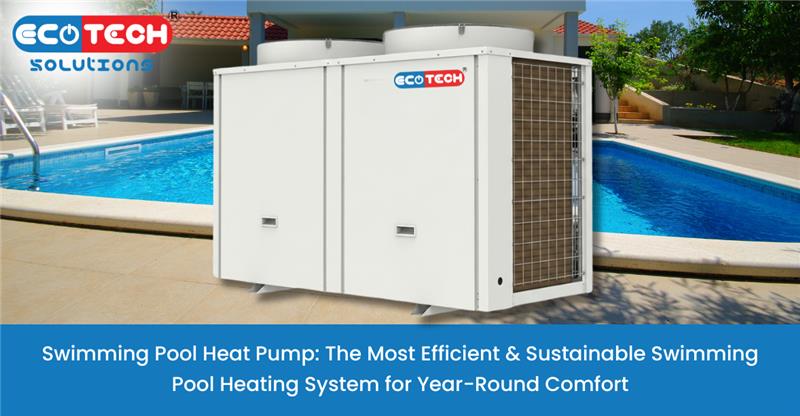
A swimming pool is a symbol of comfort, relaxation, wellness, and modern living. Whether installed in a luxury villa, resort, sports facility, or residential community, a pool significantly enhances lifestyle and property value. However, without a proper temperature control solution, its usability becomes limited to certain seasons. That is why investing in a Swimming pool heat pump is no longer a luxury—it is a smart, energy-efficient necessity.
If you are searching for a reliable and high-performance Swimming pool heating system, understanding the technology, advantages, cost savings, and environmental impact is essential. In this comprehensive guide, we explore everything you need to know before choosing the ideal heating solution for your pool.
What Is a Swimming Pool Heat Pump?
A Swimming pool heat pump is an advanced heating device that transfers heat from the surrounding air into the pool water. Unlike electric or gas heaters that generate heat directly by consuming high energy, heat pumps use ambient air energy and convert it into usable heat through a thermodynamic process.
In simple terms, it works like a reverse air conditioner. Instead of removing heat from water, it adds heat to maintain a comfortable and consistent swimming temperature.
Because it transfers heat rather than creating it, the system consumes significantly less electricity while delivering superior performance.
How a Swimming Pool Heating System Works
Understanding the working principle helps you appreciate why this technology is so efficient.
1. Air Intake
A built-in fan draws warm ambient air into the unit.
2. Heat Absorption
The air passes over an evaporator coil filled with refrigerant. The refrigerant absorbs heat from the air and transforms into gas.
3. Compression
The compressor increases the pressure and temperature of the gas.
4. Heat Transfer
The heated gas passes through a titanium heat exchanger, transferring heat to the circulating pool water.
5. Continuous Circulation
The warmed water flows back into the pool while the cycle repeats until the desired temperature is reached.
This automated and energy-efficient cycle ensures steady heating with minimal energy consumption.
Why Choose a Swimming Pool Heat Pump Over Traditional Systems?
When comparing heating technologies, heat pumps consistently outperform traditional systems in efficiency and sustainability.
1. High Energy Efficiency (COP Advantage)
The Coefficient of Performance (COP) of a heat pump typically ranges between 4 and 6. This means:
- For every 1 unit of electricity consumed
- It produces 4–6 units of heat energy
Electric heaters usually operate at a COP of 1, making them far less efficient.
2. Significant Cost Savings
Although the initial investment may be slightly higher, the operating cost is considerably lower. Over time, energy savings compensate for the purchase cost.
Long-term financial benefits include:
- Reduced electricity bills
- Lower maintenance costs
- Minimal fuel dependency
For commercial properties, ROI is often achieved faster due to frequent pool usage.
3. Environmentally Responsible Heating
A modern Swimming pool heating system using heat pump technology:
- Reduces carbon emissions
- Avoids fossil fuel consumption
- Uses renewable air energy
- Supports sustainable infrastructure development
This makes it ideal for eco-conscious homeowners and green building projects.
4. Enhanced Safety
Unlike gas-based heaters, heat pumps offer:
- No combustion
- No open flames
- No toxic fumes
- No gas leakage risks
Safety and reliability make them suitable for both residential and commercial use.
5. Long Lifespan & Durability
With proper installation and periodic servicing, a quality Swimming pool heat pump can operate efficiently for 10–15 years or more. Titanium heat exchangers resist corrosion from chemically treated pool water, ensuring long-term durability.
Applications of a Swimming Pool Heating System
Heat pump technology is versatile and adaptable across multiple sectors:
Residential Use
- Luxury villas
- Bungalows
- Farmhouses
- Private residences
- Gated communities
Homeowners benefit from extended swimming seasons and enhanced comfort.
Commercial Use
- Hotels & Resorts
- Sports academies
- Schools
- Real estate developments
- Wellness & spa centers
- Clubhouses
Maintaining ideal water temperature improves customer satisfaction and increases property appeal.
Factors to Consider Before Choosing the Right System
Selecting the correct Swimming pool heating system requires proper evaluation.
1. Pool Volume
Measured in cubic meters or liters, larger pools require higher capacity units.
2. Desired Temperature Rise
The greater the temperature difference between current and target temperature, the more heating capacity required.
3. Ambient Climate
Heat pumps perform best in moderate to warm climates, which makes them ideal for Indian conditions.
4. Usage Frequency
Daily-use pools need consistent heating capacity.
5. Installation Space
Proper ventilation around the unit ensures optimal airflow and efficiency.
Professional assessment ensures accurate sizing and maximum performance.
Energy Savings in Indian Climate Conditions
India’s climate offers favorable conditions for heat pump operation. Even during winter, many regions maintain ambient temperatures sufficient for efficient heating.
In cities such as:
- Ahmedabad
- Mumbai
- Pune
- Hyderabad
- Chennai
- Delhi
Heat pumps perform effectively throughout most of the year.
Because the system extracts heat from air, even moderately warm air provides enough energy for efficient operation.
Comparison: Heat Pump vs Electric & Gas Heaters
| Parameter | Heat Pump | Electric Heater | Gas Heater |
| Energy Efficiency | Very High | Low | Moderate |
| Operating Cost | Low | Very High | High |
| Installation Complexity | Moderate | Simple | Moderate |
| Environmental Impact | Low | Moderate | High |
| Lifespan | 10–15 Years | 5–7 Years | 5–8 Years |
From a long-term perspective, heat pumps offer the most economical and environmentally friendly solution.
Installation Best Practices
Proper installation maximizes performance and efficiency:
- Install outdoors with good airflow
- Avoid blocked ventilation areas
- Maintain adequate clearance around the unit
- Ensure correct plumbing integration
- Maintain proper water flow rate
Using a pool cover further enhances heat retention and reduces energy consumption.
Maintenance Guidelines for Long-Term Performance
Maintenance is simple yet essential:
- Clean air filters regularly
- Keep surroundings free from debris
- Inspect electrical connections periodically
- Maintain proper pool water chemistry
- Schedule annual professional servicing
Regular maintenance ensures consistent efficiency and longer equipment life.
Technological Advancements in Modern Pool Heat Pumps
Modern systems now include:
- Digital smart controllers
- Automatic temperature sensors
- Intelligent defrost function
- Low-noise operation
- Energy-saving eco modes
- Corrosion-resistant body panels
These innovations enhance convenience, efficiency, and reliability.
Return on Investment (ROI)
A high-quality Swimming pool heat pump typically recovers its investment within a few years through energy savings.
For commercial facilities:
- Increased guest satisfaction
- Extended pool usage
- Reduced operational expenses
For homeowners:
- Year-round comfort
- Increased property value
- Lower electricity bills
The financial and practical advantages make it a smart long-term decision.
Frequently Asked Questions (FAQs)
Most residential pools are comfortable between 26°C and 29°C.
Initial heating may take 24–72 hours depending on pool size and weather conditions.
Yes, as long as ambient temperature remains above the minimum operating level specified by the manufacturer.
No. Heat pumps are significantly more energy-efficient than electric heaters.
Typically 10–15 years with proper maintenance.
Yes. Systems can be designed for both residential and large-scale commercial applications.
Modern models operate quietly and are suitable for residential environments.
No. Basic maintenance and annual inspection are generally sufficient.
Yes, most systems are compatible with standard pool circulation setups.
Yes. It uses renewable air energy and reduces carbon emissions.
Conclusion
A modern Swimming pool heat pump represents the future of energy-efficient pool heating. As a reliable Swimming pool heating system, it combines performance, sustainability, cost savings, and long-term durability.
Whether for residential comfort or commercial profitability, heat pump technology offers unmatched efficiency in Indian climate conditions. By choosing the right capacity, ensuring professional installation, and maintaining regular servicing, you can enjoy warm, comfortable swimming all year—while keeping energy consumption under control.
Invest smartly. Choose sustainability. Experience comfort without compromise.
Contact Us: EcoTech Solutions