
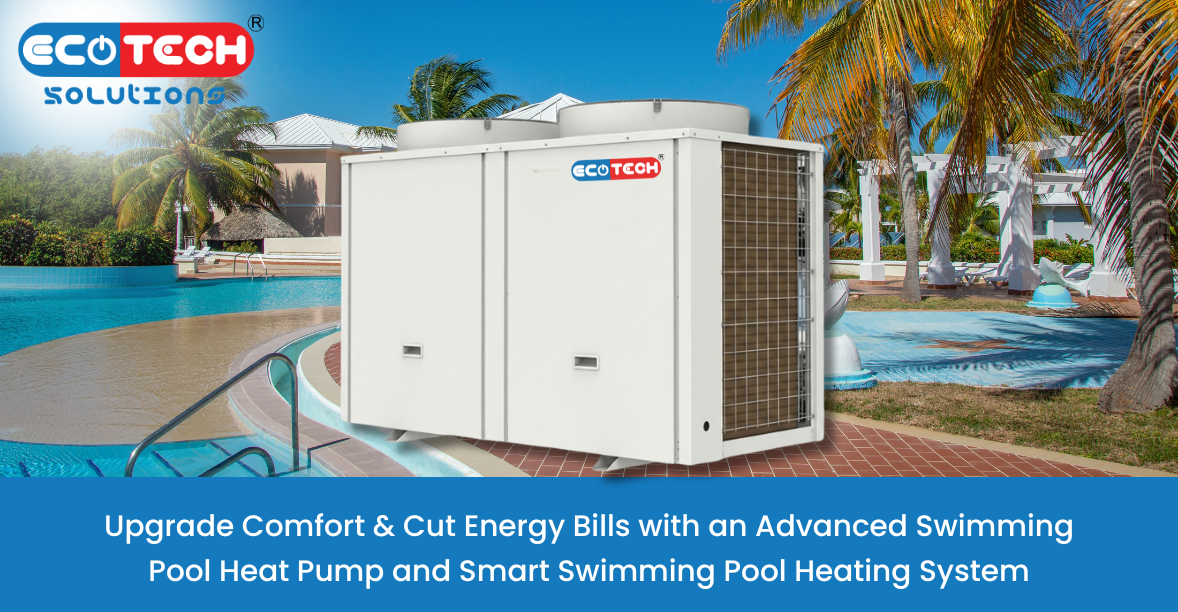
A swimming pool is designed for relaxation, recreation, fitness, and luxury — but without proper temperature control, it often remains underutilized for a large part of the year. A professionally engineered Swimming pool heat pump integrated into a reliable Swimming pool heating system transforms your pool into a year-round asset.
At ET Solutions, we focus on energy-efficient, sustainable, and performance-driven heating technologies tailored for Indian climatic conditions. Whether you manage a hotel, own a villa, operate a fitness center, or oversee a sports facility, installing the right pool heating solution ensures comfort, operational savings, and long-term reliability.
This comprehensive guide will help you understand how pool heat pumps work, their advantages, sizing considerations, cost factors, and why they are becoming the preferred heating solution across residential and commercial sectors.
Understanding the Technology Behind a Swimming Pool Heat Pump
Unlike conventional electric or gas heaters that generate heat by consuming fuel or electricity, a Swimming pool heat pump transfers heat from the surrounding air into your pool water.
Working Principle Explained Simply
- The unit draws in ambient air using a fan.
- The air passes over an evaporator coil containing refrigerant.
- The refrigerant absorbs heat and converts into warm gas.
- A compressor increases the gas temperature further.
- The heated gas passes through a heat exchanger.
- Pool water flows through the heat exchanger and absorbs the heat.
- The refrigerant cools and the cycle repeats.
Because the system moves heat instead of generating it, energy efficiency is significantly higher.
What Makes It Efficient?
The performance of a heat pump is measured by COP (Coefficient of Performance). A COP of 5 means the system produces 5 units of heat for every 1 unit of electricity consumed. This is why a well-designed Swimming pool heating system using heat pump technology can reduce operational costs drastically.
Why Modern Swimming Pool Heating Systems Are Essential in India
India’s climate varies from tropical to moderate winter zones. Even in regions with mild winters, pool water becomes too cold for comfortable swimming.
Key Reasons to Install a Pool Heating System
- Extend swimming season during winter months
- Enable early morning and evening swimming
- Improve comfort for children and elderly swimmers
- Increase property value and appeal
- Enhance guest experience in hotels and resorts
- Maintain therapeutic water temperature in wellness centers
For commercial establishments, temperature consistency directly impacts customer satisfaction and revenue generation.
Comparing Different Pool Heating Technologies
1. Gas Pool Heaters
- Quick heating
- High fuel cost
- Higher carbon emissions
- Best for occasional heating needs
2. Electric Resistance Heaters
- Lower upfront cost
- Extremely high operating cost
- Suitable only for small pools
3. Solar Pool Heating
- Eco-friendly
- Weather dependent
- Requires large installation area
4. Heat Pump-Based Swimming Pool Heating System
- Energy efficient
- Low operational cost
- Environmentally friendly
- Ideal for regular and long-term use
Among all options, the Swimming pool heat pump provides the best balance between performance and cost-effectiveness.
Key Components of a High-Performance Swimming Pool Heat Pump
When selecting a premium heating solution, focus on these essential features:
Titanium Heat Exchanger
Resistant to corrosion from chlorinated or saline water.
Inverter Compressor Technology
Adjusts power automatically based on heating demand, improving efficiency and reducing noise.
Digital Smart Controller
Precise temperature settings with user-friendly interface.
Automatic Defrost System
Ensures efficient winter operation.
Anti-Corrosion Cabinet
Increases durability in humid and coastal areas.
High COP Rating
Ensures maximum heat output with minimum power consumption.
Sizing Your Swimming Pool Heating System Correctly
Proper sizing is critical for efficiency and performance.
Factors That Influence Capacity
- Pool Volume (Liters or Cubic Meters)
- Desired Water Temperature
- Ambient Temperature
- Wind Exposure
- Use of Pool Cover
- Daily Usage Pattern
Undersized systems struggle to maintain temperature, while oversized units increase initial cost unnecessarily. Professional consultation ensures optimal sizing.
Energy Savings and Long-Term Cost Benefits
One of the biggest advantages of installing a Swimming pool heat pump is reduced operational cost.
How It Saves Money
- Consumes less electricity than resistance heaters
- No fuel dependency like gas heaters
- Maintains temperature efficiently with inverter technology
- Lower maintenance requirements
Over 5–7 years, the cost savings can outweigh the initial investment difference compared to conventional systems.
Environmental Benefits of Heat Pump-Based Heating Systems
Sustainability is no longer optional — it’s essential.
A modern Swimming pool heating system based on heat pump technology:
- Reduces greenhouse gas emissions
- Uses renewable heat from air
- Supports green building certification
- Minimizes fossil fuel dependency
For hotels and commercial properties aiming for eco-friendly branding, this becomes a strong advantage.
Residential vs Commercial Applications
Residential Pools
- Villas
- Farmhouses
- Premium apartments
- Gated communities
Benefits:
- Extended family usage
- Increased property value
- Comfortable year-round swimming
Commercial Pools
- Hotels & Resorts
- Sports Academies
- Fitness Centers
- Rehabilitation Facilities
Benefits:
- Enhanced guest experience
- Higher occupancy rates
- Increased membership retention
Installation Best Practices
Proper installation ensures peak performance.
Recommended Installation Guidelines
- Install in open, well-ventilated area
- Maintain adequate clearance around unit
- Ensure proper water flow rate
- Integrate with filtration and circulation system
- Use pool cover to minimize heat loss
Professional installation prevents performance issues and maximizes lifespan.
Maintenance for Long-Term Efficiency
A Swimming pool heat pump is low maintenance, but routine checks improve longevity.
Maintenance Checklist
- Clean air filters monthly
- Remove debris from evaporator coils
- Inspect electrical connections
- Check refrigerant pressure annually
- Service by professional technician once per year
With proper care, heat pumps can operate efficiently for 10–15 years or more.
Frequently Asked Questions (FAQs)
A heat pump-based Swimming pool heating system is the most energy-efficient option for long-term and regular usage.
Initial heating may take 24–72 hours depending on pool size and starting temperature. After reaching the set temperature, it maintains heat efficiently.
Yes. Modern units are designed to operate in lower ambient temperatures, especially suitable for Indian winter conditions.
Most comfortable swimming temperature ranges between 26°C and 30°C.
It consumes significantly less electricity compared to electric resistance heaters because it transfers heat instead of generating it.
For consistent use and lower operational costs, heat pumps are generally more economical and environmentally friendly.
Yes, using a pool cover reduces heat loss and improves energy efficiency.
With proper maintenance, the lifespan ranges between 10–15 years.
Professional installation is recommended, but the process is straightforward when handled by experienced technicians.
Modern inverter-based units operate quietly and are suitable for residential environments.
Why Choose ET Solutions for Your Swimming Pool Heating System?
ET Solutions combines engineering expertise with energy-efficient technology to deliver reliable heating solutions.
What Sets Us Apart
- Advanced inverter technology
- Durable corrosion-resistant components
- Customized capacity calculation
- Professional installation support
- Reliable after-sales service
- Energy-saving design for Indian climate
Our commitment is not just to provide equipment, but to deliver sustainable and cost-effective heating solutions tailored to your needs.
Final Thoughts
A Swimming pool heat pump is not simply an accessory — it is a strategic investment in comfort, efficiency, and long-term savings. Whether for residential luxury or commercial profitability, a properly designed Swimming pool heating system ensures your pool remains inviting in every season.
By choosing advanced heat pump technology, you reduce operational expenses, minimize environmental impact, and extend the usability of your swimming facility year-round. If you are planning to upgrade or install a pool heating solution, ET Solutions offers the expertise and technology required to deliver performance, durability, and energy efficiency you can trust.
Contact Us: EcoTech Solutions