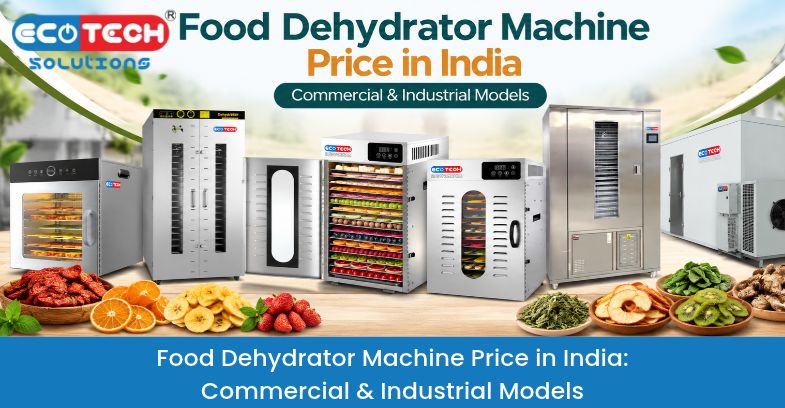
Food dehydration is an efficient method of preserving fruits, vegetables, herbs, spices, grains, snacks, and other food products by reducing their moisture content. As demand for naturally preserved and shelf-stable foods continues to grow, businesses are increasingly investing in commercial and industrial dehydration equipment. Choosing the right machine requires consideration of capacity, drying technology, energy consumption, temperature control, construction quality, and overall operating cost.
When comparing the Food dehydrator machine price, buyers should look beyond the initial purchase cost. The right equipment can improve production efficiency, maintain consistent product quality, reduce wastage, and help businesses handle larger quantities of food with greater reliability.
EcoTech provides food drying and dehydration solutions designed for different commercial and industrial requirements. Depending on production volume and application, businesses can select suitable electrical dehydrators or advanced heat pump drying systems.
What Is a Food Dehydrator Machine?
A food dehydrator machine is equipment designed to remove moisture from food products using controlled heat and airflow. Unlike traditional open-air drying, a modern dehydrator provides a controlled environment where temperature, airflow, and drying conditions can be managed more consistently.
The process helps extend the shelf life of food while retaining important characteristics such as flavor, texture, aroma, and appearance. Dehydration is commonly used for fruits, vegetables, mushrooms, herbs, spices, meat products, snacks, and various processed foods.
For commercial operations, selecting the appropriate machine depends on the quantity of food that needs to be processed per batch. Small businesses may require compact tray-based equipment, while larger manufacturers may need high-capacity industrial systems.
Factors Affecting Food Dehydrator Machine Price
The Food dehydrator machine price can vary considerably depending on its design, capacity, technology, and specifications. Understanding these factors can help businesses make a more informed purchasing decision.
1. Machine Capacity
Capacity is one of the most important factors affecting the cost of a dehydrator. A machine designed for a small production facility will generally have fewer trays and a lower processing capacity.
Commercial and industrial models may include multiple trays or larger drying chambers to accommodate higher production volumes. Businesses should select a capacity based on their daily processing requirements rather than simply choosing the largest available machine.
2. Drying Technology
Different dehydration technologies can affect both the purchase price and operating costs. Conventional electrical dehydrators use heating elements to produce controlled drying temperatures. Heat pump systems use a different approach to manage heat and moisture during the drying process.
A heat pump dryer can offer controlled drying conditions and may be suitable for businesses looking for efficient food drying technology.
3. Temperature Control
Accurate temperature control is important when processing food. Different products require different drying temperatures and durations. Fruits, vegetables, herbs, and other products can have specific drying requirements.
A machine with reliable temperature regulation allows operators to create more consistent drying conditions from batch to batch.
4. Construction and Material Quality
Commercial and industrial food dehydrators need to withstand regular operation. Stainless-steel construction is commonly preferred in food processing environments because it is durable, easier to clean, and suitable for hygienic production areas.
The quality of trays, insulation, heating components, fans, controls, and the drying chamber can all influence the overall equipment cost.
5. Energy Consumption
Energy efficiency should be considered alongside the initial purchase price. A machine that consumes less energy while delivering the required drying performance can help reduce operating expenses over time.
Therefore, businesses evaluating food dehydrator machine price in india should also compare the machine’s power requirements, expected operating hours, batch capacity, and drying performance.
Food Dehydrator Machine Price in India: What Should Businesses Consider?
The food dehydrator machine price in india depends on the machine’s capacity, technology, construction, and configuration. Entry-level equipment may be appropriate for small businesses, while commercial and industrial machines are designed for larger production requirements.
Instead of choosing equipment based only on price, businesses should calculate the expected return on investment. A machine with a higher initial cost may be more economical over its operating life if it provides greater capacity, improved energy efficiency, consistent drying, and reduced product wastage.
Before purchasing, consider:
- Required production capacity
- Number of trays
- Type of food products
- Required drying temperature
- Drying time
- Power consumption
- Available installation space
- Material and construction
- Cleaning and maintenance requirements
- Automation and controls
- Manufacturer support
- Warranty and service availability
These factors help businesses choose equipment that matches their actual production requirements.
Commercial Food Dehydrators for Growing Businesses
Commercial food dehydration is useful for businesses that process moderate to large quantities of food. Food manufacturers, agricultural processors, snack producers, spice businesses, and food entrepreneurs can use dehydrators to convert fresh ingredients into products with longer storage potential.
A commercial dehydrator can also help businesses standardize their drying process. Instead of relying on variable environmental conditions, operators can use controlled temperature and airflow to produce more predictable results.
For example, a business processing seasonal fruits can use dehydration to create dried fruit products that can be marketed beyond the fresh harvest season. Similarly, vegetable processors can produce dried vegetables for snacks, instant food products, seasoning mixes, and other applications.
Industrial Food Dehydrator Machine
An industrial food dehydrator machine is designed for businesses that require larger production volumes and continuous or frequent batch processing. These machines generally provide greater drying capacity and are designed for demanding commercial environments.
Industrial dehydration can be used in several food processing applications, including:
- Fruits and vegetables
- Herbs and leafy greens
- Spices
- Mushrooms
- Seeds
- Snacks
- Meat products
- Food ingredients
- Agricultural produce
- Specialty dried foods
When selecting an industrial food dehydrator machine, businesses should evaluate the amount of raw material processed per day and the required output after drying. The moisture content of the product can significantly affect drying time and final production capacity.
A larger machine is not automatically the best choice. The equipment should be sized according to production requirements, available infrastructure, and expected future growth.
Electrical Dehydrators for Food Processing
Electrical tray dehydrators are a practical option for many commercial applications. These systems use electrical heating and controlled airflow to dry food products inside a dedicated chamber.
For businesses looking for larger tray-based drying capacity, EcoTech offers a 32 Tray electrical dehydrator designed for commercial food drying applications.
Tray-based systems can be useful because food products can be distributed across individual trays, allowing operators to organize different products or batches inside the drying chamber. The design can also make loading and unloading more manageable for commercial operations.
The appropriate electrical dehydrator should be selected according to the product type, batch size, drying temperature, and expected operating schedule.
Heat Pump Drying Technology for Food
Heat pump technology is increasingly relevant to modern food processing because it provides a controlled method of managing heat and moisture during drying.
A Heat Pump Dryer for Food can be considered by businesses looking for an alternative to conventional food drying systems. Heat pump drying can provide controlled environmental conditions that are useful for food products where consistent drying quality is important.
The technology can be particularly useful for businesses processing products that require controlled temperature and humidity conditions. Proper drying can help reduce moisture while maintaining desirable product characteristics.
Businesses should compare heat pump systems with conventional electrical dryers based on their specific application, production volume, operating hours, available electricity, and desired drying performance.
Food Dryer Machine Price and Total Operating Cost
When comparing food dryer machine price, it is important to evaluate the total cost of ownership rather than focusing only on the purchase price.
Total operating costs may include:
- Electricity consumption
- Routine maintenance
- Cleaning
- Replacement components
- Labor
- Installation
- Product handling
- Downtime
- Service and support
A machine that has a lower initial price but requires significantly more energy or maintenance may not necessarily be the most economical choice in the long term.
Businesses should estimate their expected daily production and compare the cost per batch or kilogram of finished product. This approach provides a clearer understanding of the equipment’s actual economic value.
How to Choose the Right Industrial Dehydrator
Choosing an industrial food dehydrator machine requires a clear understanding of the production process. Start by identifying the type of food you plan to dry and determine the amount of fresh product processed per batch.
Next, consider the moisture content of the raw material. Products with high moisture levels may require longer drying periods or greater drying capacity.
You should also consider whether the machine will operate occasionally, seasonally, or every day. Businesses with high utilization should pay particular attention to energy efficiency, reliability, serviceability, and machine durability.
It is also useful to discuss your application with an experienced equipment manufacturer before purchasing. A manufacturer can help determine suitable capacity, drying technology, temperature ranges, and configuration.
Why Work With an Experienced Heat Pump Manufacturer?
Choosing an experienced supplier can make a significant difference when purchasing commercial or industrial drying equipment. Businesses may require technical guidance before selecting a machine because food products can have very different drying characteristics.
EcoTech provides industrial heating and drying solutions for commercial applications. As a Heat Pump Manufacturer, the company offers technologies designed for applications requiring controlled heating and drying.
Working with an experienced manufacturer can help businesses understand equipment specifications, installation requirements, operating conditions, and suitable configurations for their production needs.
Applications of Food Dehydration
Food dehydration has applications across several industries. Agricultural businesses can use dehydrators to process surplus produce and reduce post-harvest losses. Food manufacturers can create dried ingredients and ready-to-use products.
Some common applications include:
Fruit Processing
Mangoes, bananas, apples, pineapples, berries, and other fruits can be processed into dried snacks and ingredients.
Vegetable Processing
Carrots, onions, tomatoes, potatoes, leafy vegetables, and other vegetables can be dehydrated for longer storage and further processing.
Herb and Spice Drying
Controlled drying can be useful for herbs and spices where maintaining aroma, color, and quality is important.
Snack Manufacturing
Dried fruits, vegetables, mushrooms, and other ingredients can be used to manufacture packaged snack products.
Agricultural Processing
Farmers and agricultural businesses can use dehydration technology to add value to seasonal produce and reduce losses caused by short shelf life.
Benefits of Investing in Commercial Dehydration Equipment
A commercial dehydrator can provide several advantages over uncontrolled drying methods.
Consistent drying: Controlled temperature and airflow can provide more uniform drying conditions.
Extended shelf life: Removing moisture can help create products suitable for longer storage when properly processed and packaged.
Reduced wastage: Dehydration can provide a way to process excess or seasonal produce.
Product diversification: Businesses can turn fresh ingredients into dried snacks, ingredients, powders, and specialty products.
Better process control: Commercial equipment allows businesses to establish repeatable drying processes.
Scalability: Larger machines can support increasing production requirements as a business grows.
Final Thoughts
Choosing the right dehydration equipment requires more than simply comparing the Food dehydrator machine price. Businesses should consider capacity, drying technology, power consumption, temperature control, construction quality, maintenance, and long-term operating costs.
For smaller and medium-sized commercial operations, electrical tray dehydrators can provide a practical solution for controlled food drying. Larger businesses may benefit from higher-capacity systems or heat pump drying technology designed for demanding processing applications.
When researching food dehydrator machine price in india, compare machines according to their actual production capacity and operating requirements. Similarly, when comparing food dryer machine price, evaluate the overall cost of ownership instead of focusing only on the initial investment.
For high-volume applications, an industrial food dehydrator machine can provide the capacity and process control required by growing food-processing businesses. The right machine can help improve production efficiency, reduce waste, and create new opportunities for dried food products.
EcoTech offers commercial and industrial food drying solutions for businesses with different production requirements. Exploring suitable equipment, understanding the required capacity, and discussing the application with an experienced manufacturer can help businesses make a more informed investment decision.
FAQs About Food Dehydrator Machines in India
1. What is the price of a food dehydrator machine in India?
The Food dehydrator machine price varies based on capacity, number of trays, drying technology, construction, and power requirements. Commercial and industrial models generally cost more than small-capacity dehydrators because they offer higher production capacity and advanced drying features.
2. What factors affect the food dehydrator machine price in India?
The food dehydrator machine price in india depends on factors such as machine capacity, number of trays, heating technology, temperature control, material, energy consumption, automation, and customization. Businesses should compare these specifications along with the purchase price.
3. What is the difference between a food dehydrator and a food dryer?
A food dehydrator removes moisture from food under controlled temperature and airflow conditions. A food dryer can refer to a broader range of drying equipment used for food processing. The appropriate system depends on the product, production volume, moisture content, and required drying conditions.
4. What is the food dryer machine price in India?
The food dryer machine price varies significantly according to capacity and technology. Small commercial units are generally more affordable, while high-capacity industrial dryers and heat pump systems require a larger investment. Requesting a quotation based on your required capacity is the best way to determine the exact cost.
5. What is an industrial food dehydrator machine used for?
An industrial food dehydrator machine is used to remove moisture from larger quantities of fruits, vegetables, herbs, spices, mushrooms, snacks, and other food products. It is suitable for food-processing businesses that need consistent drying and higher production capacity.