
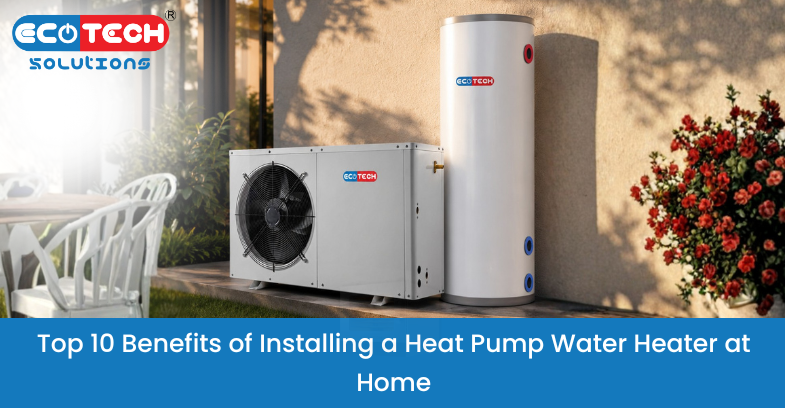
Modern homeowners are no longer looking at water heating as just a basic utility requirement. Rising electricity bills, increasing awareness about sustainable living, and the need for long-term cost savings are pushing homeowners toward smarter heating technologies. This is where the benefits of heat pump water heater systems become highly relevant for Indian households.
Traditional electric geysers consume a large amount of electricity because they generate heat directly through resistance heating. In contrast, heat pump water heaters use advanced thermal transfer technology to deliver hot water with significantly lower energy consumption. For homes, apartments, villas, hotels, and residential projects, this technology offers a practical combination of energy efficiency, comfort, and long-term savings.
As energy costs continue to rise across India, homeowners are increasingly searching for alternatives that can reduce operational expenses without compromising performance. A heat pump water heater addresses this challenge by using ambient air heat to warm water efficiently, making it one of the most energy-efficient water heating solutions available today.
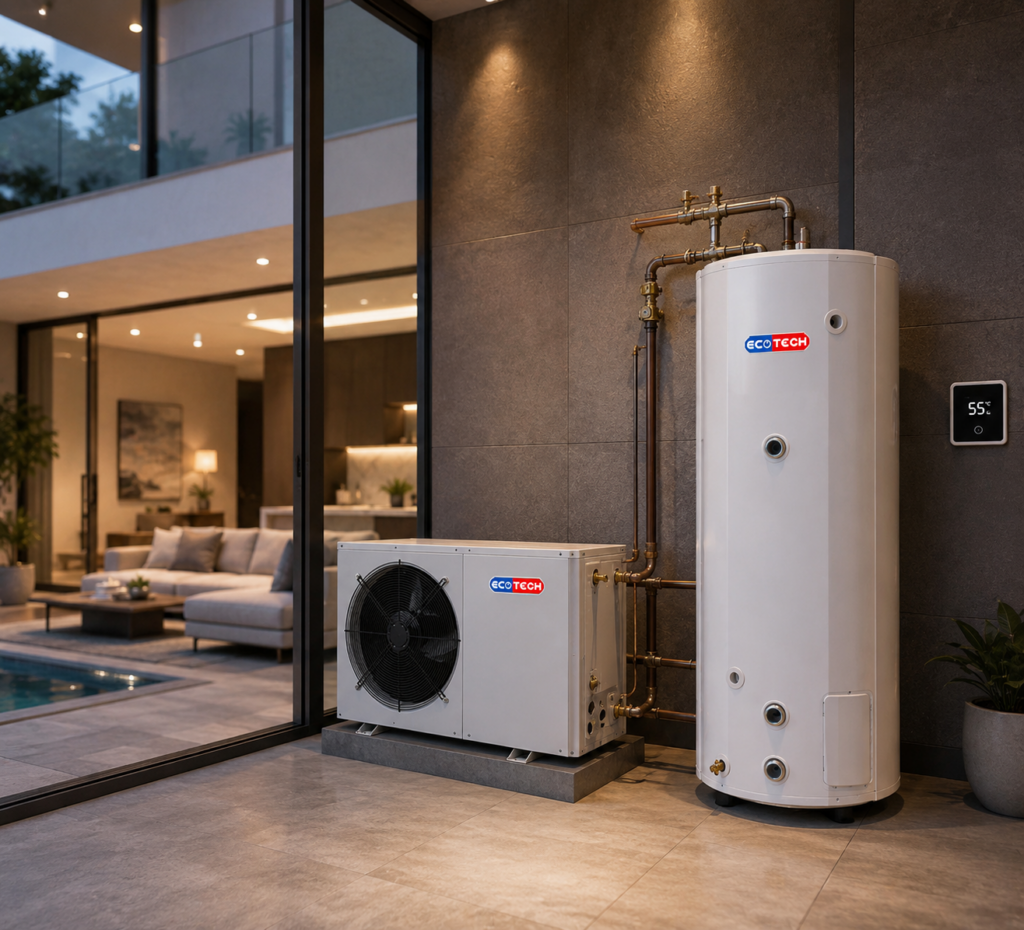
What is a Heat Pump Water Heater?
A heat pump water heater is an advanced water heating system that transfers heat from the surrounding air into water instead of generating heat directly through electrical resistance.
Unlike traditional geysers, which consume high electricity to create heat, heat pump systems operate using refrigeration cycle technology. This process allows them to deliver the same amount of hot water while consuming substantially less power.
These systems are widely used in:
- Residential homes
- Luxury apartments
- Hotels and resorts
- Hospitals
- Commercial buildings
- Industrial staff housing
- Educational institutions
The growing demand for energy efficient water heater systems in India has made heat pump technology increasingly popular among modern homeowners and developers.
How Heat Pump Water Heaters Work
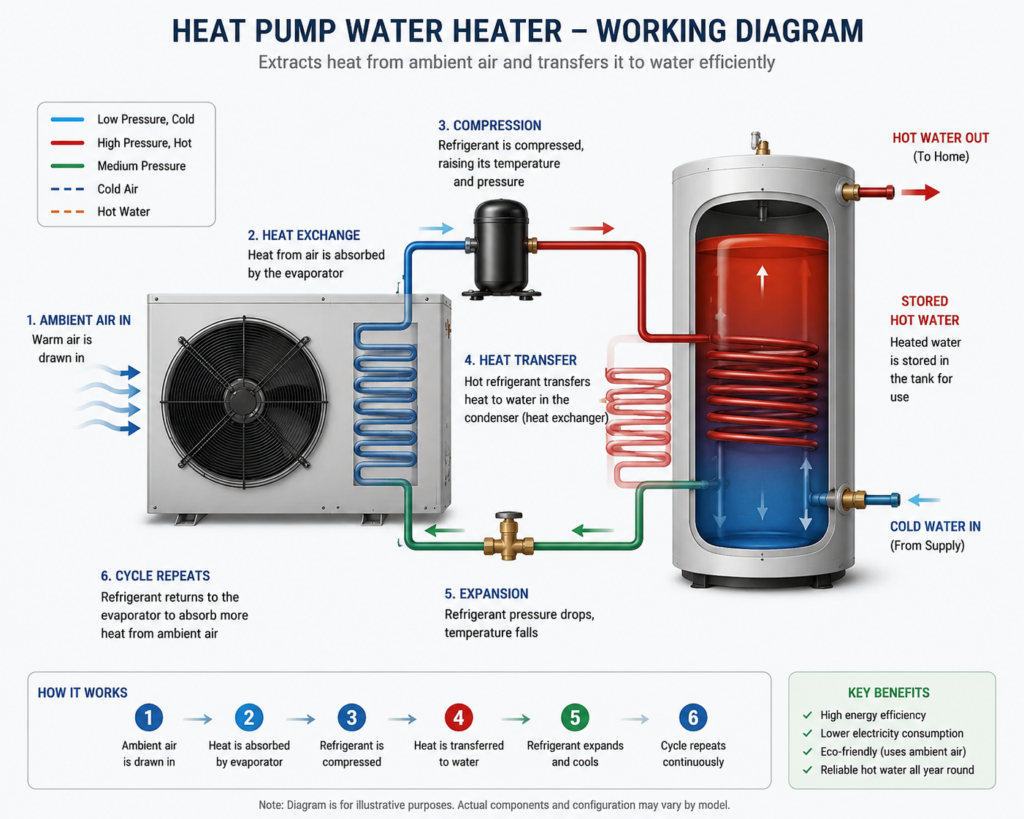
A heat pump water heater operates through a thermodynamic process similar to air conditioners and refrigeration systems.
Step-by-Step Working Process
- The system absorbs heat from surrounding air.
- Refrigerant inside the evaporator captures thermal energy.
- The compressor increases refrigerant temperature and pressure.
- Heat transfers to water through a condenser.
- Heated water is stored in an insulated tank.
- The cycle repeats efficiently with minimal electricity usage.
Main Components
- Evaporator coil
- Compressor
- Condenser
- Expansion valve
- Insulated storage tank
- Smart temperature controller
Because the system transfers heat rather than generating it directly, electricity consumption is dramatically reduced.
Types of Heat Pump Water Heaters
Air Source Heat Pump Water Heater
The most commonly used system for residential applications. It extracts heat from ambient air and transfers it to water.
Best For:
- Homes
- Apartments
- Villas
- Hotels
Split Heat Pump Water Heater
Comes with separate indoor and outdoor units for quieter indoor operation and flexible installation.
Best For:
- Premium residential projects
- Space-constrained homes
Integrated Heat Pump Water Heater
The compressor and tank are integrated into a single compact unit.
Best For:
- Domestic residential installations
- Small commercial setups
Commercial Heat Pump Systems
Large-capacity systems designed for high-volume hot water requirements.
Best For:
- Hospitals
- Hotels
- Industrial facilities
- Hostels
Industrial Applications of Heat Pump Technology
Although this article focuses on residential systems, heat pump technology also has extensive industrial applications.
Common Industrial Uses
- Food processing plants
- Dairy processing units
- Textile industries
- Chemical manufacturing
- Pharmaceutical plants
- Hospitality facilities
- Industrial kitchens
Industries use heat pump systems because they reduce operational energy costs while maintaining consistent heating performance.
Industries That Use Heat Pump Water Heating Systems
Hospitality Industry
Hotels require continuous hot water supply for guest rooms, kitchens, and laundry systems.
Healthcare Sector
Hospitals depend on reliable hot water for sanitation and hygiene compliance.
Residential Real Estate
Builders increasingly install central heat pump systems in premium apartment projects.
Educational Institutions
Hostels and universities benefit from centralized hot water solutions.
Food Processing Units
Heat pumps help reduce energy costs in washing and cleaning operations.
Key Features of Heat Pump Water Heaters
Modern heat pump water heaters are equipped with advanced features that improve efficiency and operational reliability.
Important Features
- High energy efficiency
- Smart temperature controls
- Automatic operation
- Stainless steel tank options
- Corrosion-resistant construction
- Low operational noise
- Eco-friendly refrigerants
- Long service life
- Thermal insulation technology
- Safety protection systems
These features make them ideal for long-term residential and commercial use.
Technical Specifications
| Specification | Typical Range |
| Water Capacity | 100L – 1000L+ |
| Operating Temperature | Up to 60°C |
| Power Consumption | 500W – 3000W |
| Energy Savings | Up to 70% |
| Refrigerant Type | Eco-Friendly Refrigerants |
| Tank Material | Stainless Steel / Glass-Lined |
| Compressor Type | Rotary / Scroll |
| Installation Type | Floor Mounted / Wall Mounted |
Industrial Workflow Integration
Heat pump water heaters can integrate seamlessly into residential and commercial infrastructure.
Integration Areas
- Solar water heating support
- Smart home systems
- Building management systems
- Centralized hot water distribution
- Industrial heating loops
This flexibility makes heat pump systems suitable for both new construction and retrofit projects.
Top 10 Benefits of Installing a Heat Pump Water Heater at Home
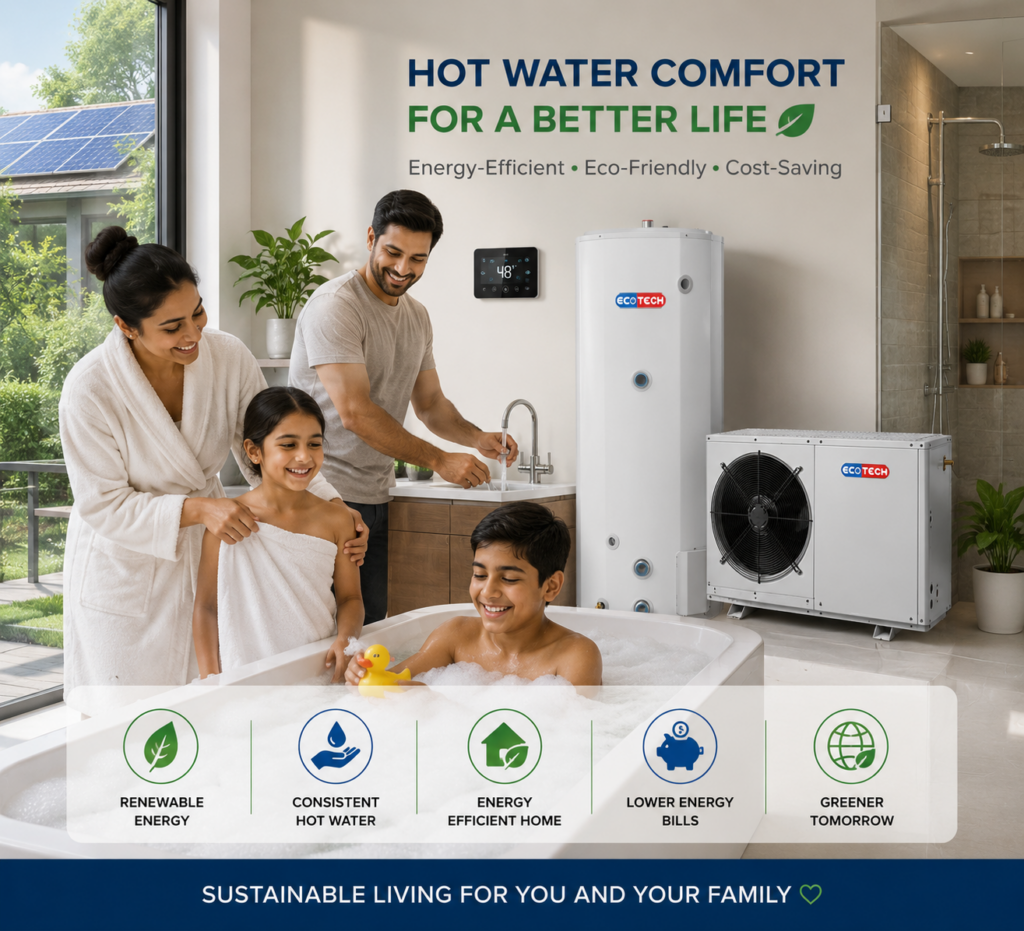
1. Significant Electricity Savings
One of the biggest advantages is reduced electricity consumption.
Traditional geysers consume large amounts of power because they directly generate heat. Heat pumps transfer heat instead, reducing electricity usage substantially.
This makes them an ideal electricity saving water heater solution for Indian homes facing rising power tariffs.
2. Lower Monthly Utility Bills
Reduced electricity usage directly lowers monthly operating costs.
Although initial installation costs may be higher than conventional geysers, homeowners often recover the investment through long-term energy savings.
3. Superior Energy Efficiency
Heat pumps can deliver 3–4 times more heating energy compared to the electricity they consume.
This makes them one of the most advanced energy efficient water heater technologies available today.
4. Environmentally Friendly Operation
Heat pump systems reduce carbon emissions because they consume less electricity.
For eco-conscious homeowners, this supports sustainable living goals and green building practices.
5. Longer Equipment Lifespan
Compared to conventional electric geysers, heat pump water heaters generally offer longer operational life due to efficient thermal management.
High-quality systems can operate reliably for many years with proper maintenance.
6. Safe and Reliable Operation
Modern systems include multiple safety protections such as:
- Overheat protection
- Pressure protection
- Leakage protection
- Automatic shutoff systems
This enhances household safety and operational reliability.
7. Consistent Hot Water Supply
Heat pump systems are designed for continuous hot water availability, especially beneficial for larger families and multi-bathroom homes.
8. Reduced Maintenance Costs
Advanced compressor systems and corrosion-resistant materials help minimize maintenance requirements.
This improves long-term ownership value.
9. Better Performance in Large Homes
For villas, duplexes, and luxury homes, heat pump systems provide centralized water heating with improved efficiency compared to multiple geysers.
10. Increased Property Value
Energy-efficient infrastructure is becoming an important selling point in residential real estate.
Installing advanced heating systems can improve property attractiveness for future buyers.
Heat Pump vs Geyser
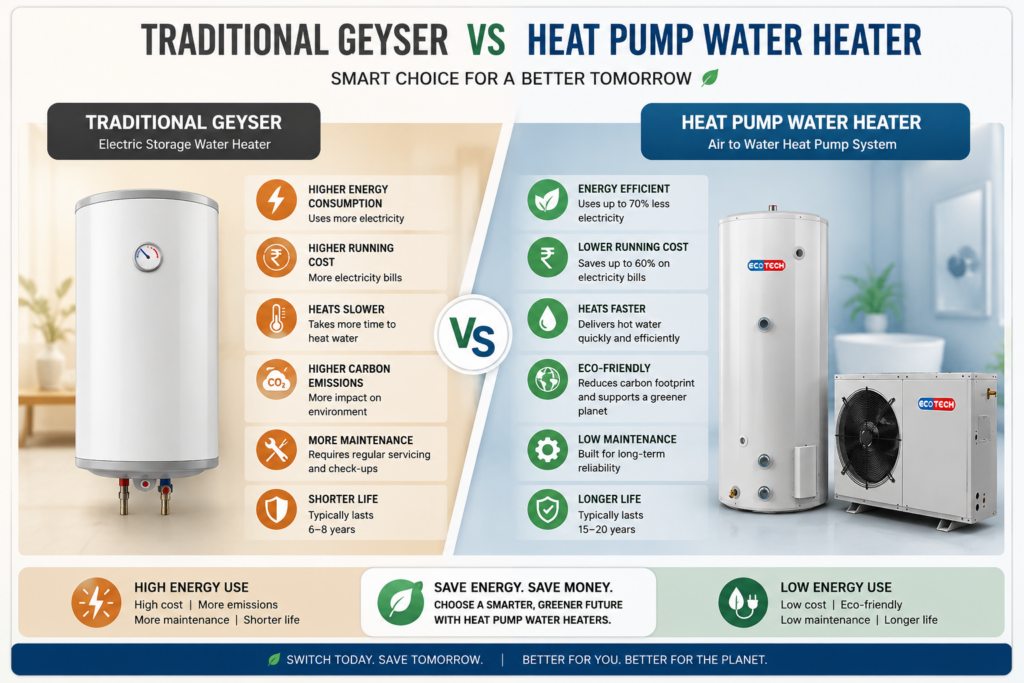
| Feature | Heat Pump Water Heater | Traditional Geyser |
| Energy Consumption | Low | High |
| Operating Cost | Low | High |
| Heating Method | Heat Transfer | Resistance Heating |
| Environmental Impact | Eco-Friendly | Higher Carbon Footprint |
| Lifespan | Longer | Moderate |
| Initial Cost | Higher | Lower |
| Long-Term Savings | Excellent | Limited |
| Maintenance | Moderate | Moderate |
This comparison clearly highlights why homeowners are increasingly considering heat pump vs geyser evaluations before making buying decisions.
Advantages and Disadvantages
Advantages
- Major electricity savings
- Eco-friendly operation
- Long-term ROI
- Consistent hot water
- Reduced carbon footprint
- Suitable for large households
- Better operational efficiency
Disadvantages
- Higher upfront investment
- Requires proper installation space
- Performance can vary in extremely cold climates
- Professional installation recommended
Despite the initial investment, long-term operational savings often outweigh the disadvantages.
Buying Guide for Heat Pump Water Heaters
Choosing the right system requires evaluating technical and operational requirements carefully.
1. Capacity Selection
Choose based on family size and hot water consumption.
| Family Size | Recommended Capacity |
| 2–3 Members | 100L–150L |
| 4–6 Members | 200L–300L |
| Large Families | 300L+ |
2. Material Quality
Look for:
- Stainless steel tanks
- Anti-corrosion coatings
- Durable insulation materials
3. Energy Efficiency Ratings
Select systems with high efficiency ratings for maximum savings.
4. Compressor Quality
The compressor is the core component of the system. Choose trusted industrial-grade technology.
5. Safety Features
Ensure the system includes:
- Temperature protection
- Pressure control
- Electrical safety systems
6. Scalability
Consider future household expansion and water demand growth.
7. Installation Support
Professional installation improves performance and equipment lifespan.
Common Mistakes to Avoid
Choosing Incorrect Capacity
Undersized systems may struggle during peak demand.
Ignoring Installation Space
Heat pumps require proper airflow for efficient operation.
Prioritizing Lowest Price Only
Low-cost systems may compromise efficiency and durability.
Skipping Professional Installation
Improper installation reduces operational efficiency and increases maintenance risks.
Maintenance Tips
Proper maintenance helps maximize system lifespan and efficiency.
Recommended Maintenance Practices
- Clean air filters regularly
- Inspect refrigerant levels
- Check insulation condition
- Monitor compressor performance
- Schedule professional servicing annually
- Inspect electrical connections
Routine maintenance helps maintain consistent energy savings.
Future Trends & Innovations
The Indian market for heat pump technology is evolving rapidly.
Emerging Trends
- Smart IoT-enabled controls
- Solar-integrated heat pump systems
- AI-based energy optimization
- Advanced inverter compressors
- Eco-friendly refrigerants
- Higher thermal efficiency systems
As energy regulations tighten globally, heat pump adoption is expected to grow significantly across residential and commercial sectors.
Why Choose ET Solutions
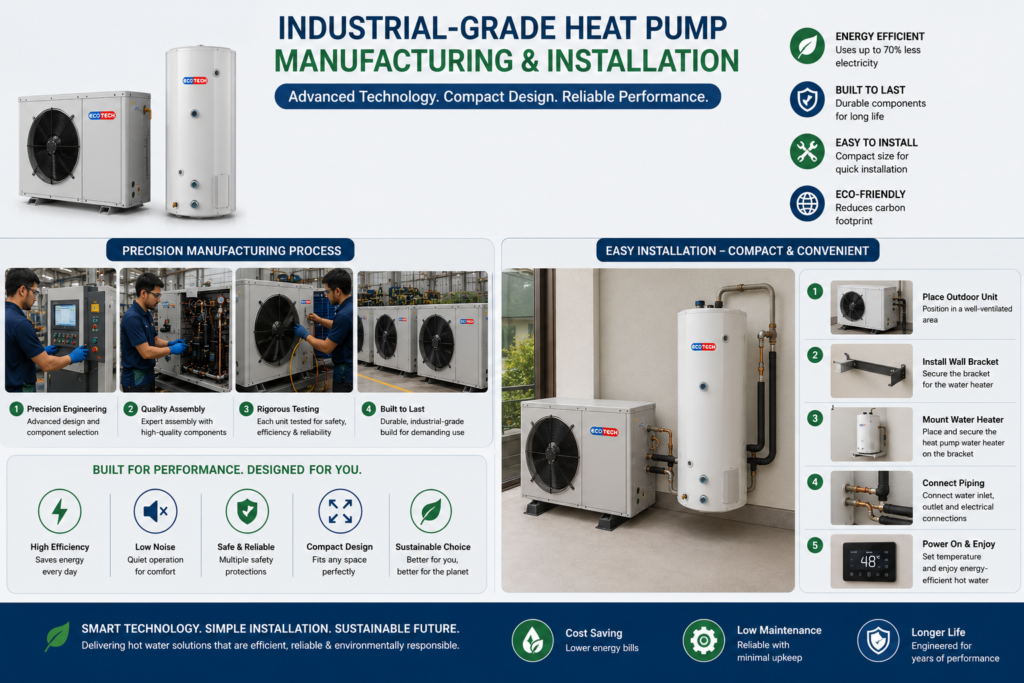
ET Solutions specializes in advanced energy-efficient thermal systems designed for residential and industrial applications.
Key Advantages
- Industrial-grade engineering expertise
- High-quality manufacturing standards
- Energy-efficient solutions
- Customized system recommendations
- Reliable installation support
- Technical consultation services
- Durable stainless steel construction
- Commercial and residential project experience
Their expertise in thermal technology and industrial engineering makes them a trusted partner for modern heating solutions.
Conclusion
The growing demand for sustainable and cost-effective home infrastructure is driving rapid adoption of advanced heating technologies across India. The numerous benefits of heat pump water heater systems — including lower electricity bills, higher energy efficiency, long-term savings, and eco-friendly operation — make them an excellent investment for modern homeowners.
Whether you are building a new home, upgrading from a traditional geyser, or planning an energy-efficient residential project, a heat pump water heater offers substantial operational and financial advantages.
If you are looking for reliable, high-performance, and energy-efficient heating solutions, ET Solutions can help you select the right system for your residential or commercial requirements.
Contact their team today for:
- Product inquiries
- Customized heating solutions
- Technical consultation
- Installation guidance
- Commercial quotations
- Industrial project support
- Bulk order requirements
- Export inquiries
Invest in smarter heating technology today and build a more energy-efficient future.
FAQs
Heat pump water heaters reduce electricity consumption, lower operating costs, provide energy-efficient heating, and support eco-friendly living.
Most systems can reduce electricity usage by up to 60–70% compared to traditional electric geysers.
In terms of long-term energy savings, efficiency, and operational cost reduction, heat pumps are generally more efficient than conventional geysers.
Yes. Heat pump systems work effectively in most Indian climate conditions and are increasingly popular in residential projects.
A well-maintained heat pump water heater can last 10–15 years or longer depending on usage and maintenance quality.
Yes. Modern systems are designed to operate efficiently across varying temperature ranges.
No. Maintenance costs are generally moderate and lower compared to long-term electricity savings.
Yes. Professional installation ensures proper airflow, efficiency, and safe operation.
The ideal capacity depends on household size and hot water usage requirements.
Yes. Many systems can integrate with solar heating solutions for enhanced energy efficiency.
Contact Us: EcoTech Solutions